The Records-Universe Closure Trap

You've asked your employer for documents in discovery. After weeks of waiting, you receive a one-page letter from the HR Director: "We have conducted a thorough search. No additional documents exist responsive to your request."
You just won something important — though it doesn't feel like it yet.
Here's what you'll learn in this article:
- Why an HR agent's "no documents exist" statement locks the employer into a binding admission
- The four-option evidentiary trap every missing record creates once the universe is closed
- How federal courts treat spoliation and closure statements together in employment cases
What Makes a Records-Universe Statement Binding
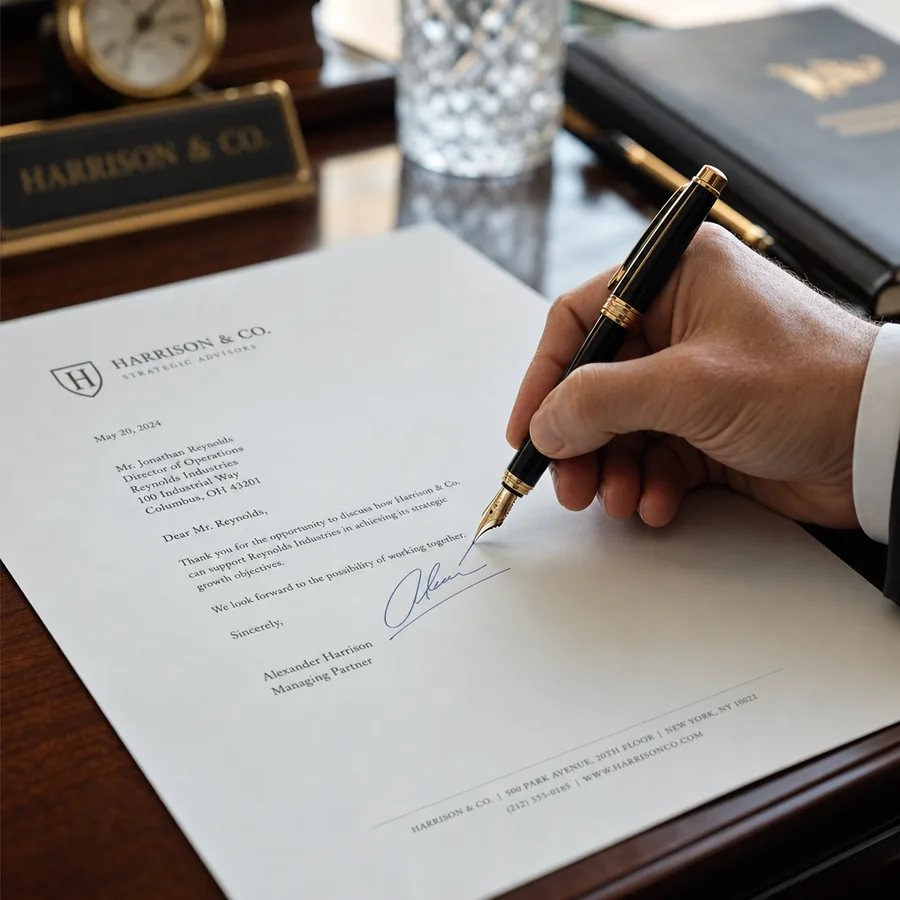
When an HR Director writes "no additional documents exist," that's not just a discovery response.
It's a party-opponent admission under Federal Rule of Evidence 801(d)(2)(D).
The Eighth Circuit explained the doctrine in Mahlandt v. Wild Canid Survival & Research Center, Inc., 588 F.2d 626 (8th Cir. 1978). Statements by agents or employees about matters within their employment scope are admissible against the employer as substantive evidence — no hearsay objection allowed.
The agent doesn't need personal knowledge of every file. They don't need specific authority to bind the company in litigation.
They just need to be acting within the scope of their job when they make the statement.
This matters because once the employer — through its agent — has closed the records universe, that admission is locked in.
The employer can't later claim the statement was just the HR Director's personal opinion. It's the company's position now.
The Four-Option Trap
Here's where it gets interesting:
Once the records universe is closed, every category of missing documents you can identify forces the employer into one of four evidentiary positions. All four hurt.
Option 1: The records never existed.
Maybe your personnel file has no performance reviews for three years. Or there's no documentation of the investigation that led to your termination. Or the time-clock system supposedly has no punch records for the disputed period.
If the employer says those records were never created, you now have evidence of a different problem: regulatory violations, failure to follow the employer's own policies, or absence of the very documentation that would prove the employer's stated reasons were legitimate.
Courts notice when an employer can't produce records it was required to keep or claimed to rely on.
Option 2: The records existed and were destroyed.
This is the spoliation path. If records once existed but are now gone, the employer must explain when and why they were destroyed.
The duty to preserve evidence arises when litigation is reasonably anticipated. That's the rule from Zubulake v. UBS Warburg LLC, 220 F.R.D. 212 (S.D.N.Y. 2003).
Once that duty attaches, the employer must suspend routine destruction policies and issue a litigation hold for relevant evidence.
If the court finds the records were destroyed with a culpable state of mind — anything from negligence to intentional destruction — spoliation sanctions are available.
That can include an adverse-inference instruction: the jury is told to assume the missing records would have been unfavorable to the employer.
Option 3: The records exist and were withheld.
Sometimes documents surface later — in a different employee's file, on a backup server, in an email chain nobody "searched" the first time.
Now the employer has a discovery-violation problem.
The HR Director's statement said no additional documents exist. The new documents prove that statement was false when made — either because the search was inadequate or because someone knowingly withheld responsive records.
Courts can impose sanctions ranging from cost-shifting to preclusion of evidence to default judgment, depending on the severity and intent.
Option 4: The produced set is actually complete.
This is the option employers think is safe. "We produced everything. The universe really is closed."
But here's the thing:
If the only documents in your personnel file are the disciplinary writeups from your last three months — and there's nothing showing the "performance problems" the employer claims justified your termination — that complete record helps you.
The absence of evidence becomes evidence of absence.
Why HR Agents Close the Universe
You might wonder why an HR Director would ever write "no additional documents exist" given these risks.
The answer: discovery rules often require it.
Federal Rule of Civil Procedure 26 requires parties to supplement their disclosures if they learn their prior response was incomplete or incorrect. Rule 33(b)(3) requires interrogatory answers to be signed by the person making them.
When you serve targeted requests, eventually someone with authority has to certify the response is complete.
And that certification — "we have searched, and this is everything" — is the records-universe closure.
The employer's counsel usually tries to preserve wiggle room with qualifiers: "after a reasonable search," "to the best of our knowledge," "subject to ongoing review."
But courts treat those qualifiers as describing the process, not limiting the admission. If the employer represented it conducted a reasonable search and found nothing more, it's bound to that representation unless it can show the search genuinely was inadequate.
How the Trap Works in Sequence
Here's how the doctrine plays out in a typical employment case:
Step 1: You request categories of documents in discovery. Performance reviews. Investigation files. Email communications. Disciplinary records. Compensation data.
Step 2: The employer produces some documents — often a thin file.
Step 3: You follow up asking about specific gaps. "Where are the performance reviews from 2021-2022?" "Where is the investigation report mentioned in the termination letter?" "Where are the emails between HR and my supervisor during the relevant period?"
Step 4: The HR Director or counsel responds in writing: "We have conducted an additional search. No further responsive documents exist."
Step 5: That statement is now a party-opponent admission under Mahlandt.
Now, at trial or summary judgment, you can introduce that statement as substantive evidence. Not to prove what the HR Director believed — to prove what the employer's records are.
And every gap you can identify in those records forces the employer into the four-option trap.
The Spoliation Overlay

The closure trap gets sharper when combined with spoliation doctrine.
Under Zubulake, the duty to preserve arises when litigation is reasonably foreseeable. For employment cases, that's often when the employee files an administrative charge, sends a demand letter, or even when the employer takes the adverse action it knows the employee will challenge.
Once that duty exists, the employer must preserve all relevant evidence — not just what ends up in the official personnel file.
Emails. Text messages. Slack conversations. Handwritten notes. Calendar entries. Draft documents.
So when the HR Director closes the universe by saying no additional documents exist, you can test that statement against the preservation timeline:
"You fired me on March 15. I filed my EEOC charge on April 2. Your litigation-hold duty arose no later than April 2. You produced my personnel file in August, and it contains no emails. Where are the emails from March through August between HR, my supervisor, and the decisionmakers?"
Now the employer must either produce them (Option 3), admit they were never preserved (Option 2), claim they never existed (Option 1), or argue the production is complete and no such emails ever existed (Option 4).
Every option creates evidence for your retaliation claim.
What the Doctrine Doesn't Do
It's important to understand the limits.
The party-opponent admission locks in the statement about the records. It doesn't automatically prove your underlying retaliation claim.
You still need to show the elements: protected activity, adverse action, causal connection, and (in some circuits) pretext or retaliatory motive.
But the closed records universe gives you circumstantial evidence for several of those elements:
- Absence of the employer's stated documentary justification suggests pretext
- Destruction of evidence after the duty to preserve arose supports an inference of consciousness of guilt
- Incomplete investigation files undermine the employer's claim it had legitimate reasons
- Missing performance reviews contradict the employer's narrative that you were a poor performer
The closure trap doesn't win your case by itself. But it turns every missing record into a factual dispute that survives summary judgment and goes to the jury.
For more on how party-opponent admissions work in employment litigation, see FRE 801(d)(2)(D): When HR Statements Become Admissions.
How Courts Apply the Trap
Federal judges are well aware of this dynamic.
When an employer's counsel stands up at a hearing and says "Your Honor, we've produced everything that exists," the court holds them to it.
If documents surface later, the court wants to know: Why weren't they found the first time? Was the search inadequate? Were they hidden? Were they destroyed after the duty to preserve arose?
The employer's answers to those questions are rarely good.
And if the employer tries to walk back the closure statement — "Well, what we meant was we produced everything we found in the personnel file, not everything that exists anywhere" — the court will look at the actual language of the HR Director's statement.
If it said "no additional documents exist," that's what it means.
The Mahlandt doctrine makes it the employer's binding admission, and the employer can't rewrite it after the fact through creative interpretation.
The Strategic Timing Element

One more wrinkle: timing.
The earlier in the case the employer closes the records universe, the more powerful the trap becomes.
If the HR Director certifies "no additional documents exist" in response to initial disclosures or first-round discovery, you have the entire remaining discovery period to test that statement.
You can depose witnesses and ask: "Where are the notes you said you took during the investigation?" "Where are the emails you referenced in your sworn declaration?" "Where is the documentation supporting the performance rating you gave my client?"
When the witness says "I don't know" or "I assumed HR had that," you point to the closure statement.
Either the records exist (and were withheld), or they don't exist (and the witness's testimony lacks foundation), or they were destroyed (spoliation), or they never existed in the first place (policy violation or fabricated justification).
The four options, over and over, across every category of missing evidence.
For a deeper look at how preservation duties and spoliation interact with discovery obligations, see Zubulake and the Duty to Preserve in Employment Cases.
Why Employers Fall Into the Trap
You might think sophisticated employers with experienced counsel would avoid making absolute closure statements.
Sometimes they do — they'll produce documents in waves, always leaving the door open for "ongoing searches."
But discovery rules and practical pressure often force closure anyway.
Discovery deadlines require completeness. Summary-judgment briefing requires the record to be fixed. Trial preparation requires knowing what evidence exists.
At some point, the employer has to commit: "This is everything."
And when an employer is confident its records support its legitimate-reason defense, it wants to close the universe. It wants to say: "Look, here's the complete file. It shows documented performance problems. It shows a fair process. It shows legitimate reasons."
The trap springs when the "complete" file shows gaps, inconsistencies, or an absence of the very evidence the employer claims justifies its actions.
Frequently Asked Questions
Can an employer reopen the records universe after closing it?
Technically yes, through supplementation under FRCP 26(e), but it triggers immediate questions about why the initial closure statement was wrong. The employer must explain whether the original search was inadequate, whether records were missed, or whether new records were created. Each explanation creates its own evidentiary problems — either the search was negligent, records were withheld, or the timeline doesn't match the employer's claimed basis for its actions.
Does the four-option trap apply if the employer hedges the closure statement with qualifiers?
Courts generally treat qualifiers like "to the best of our knowledge" or "after reasonable search" as describing the search process, not limiting the admission's scope. If the employer certified it conducted a reasonable search and found no additional records, it's bound to that representation. The employer can't later claim the search was unreasonable or incomplete without admitting a discovery violation.
What if the missing records are in a third party's possession, not the employer's?
The party-opponent admission applies to records within the employer's possession, custody, or control. If records are held by a third party the employer doesn't control — like an independent contractor or a separate corporate entity — the closure statement typically wouldn't cover them. But if the employer had the practical ability to obtain the records (for example, from a subsidiary or a vendor working at the employer's direction), courts may find they were within the employer's "control" for discovery purposes.
How does the closure trap interact with claims that electronic records are too burdensome to produce?
Under the Zubulake framework, if an employer claims electronic records are not reasonably accessible due to burden or cost, the court conducts a multi-factor analysis and may shift costs or limit the scope of production. But the employer can't claim records are simultaneously too burdensome to produce and non-existent. If the HR Director certifies no additional responsive documents exist, that statement controls — the employer can't later argue responsive emails exist but are too expensive to retrieve.
What happens if documents surface during trial that weren't produced during discovery despite a closure statement?
Courts treat mid-trial document production after a universe-closure statement very seriously. Potential sanctions include exclusion of the late-produced documents, adverse-inference instructions, mistrial, or in extreme cases, default judgment. The employer must show exceptional circumstances — such as truly inadvertent omission coupled with immediate disclosure upon discovery — to avoid significant sanctions. The party-opponent admission from the closure statement becomes evidence the employer made a material misrepresentation to the court.