Vance v. Ball State: Who Counts as a 'Supervisor' Under Title VII

You reported harassment to HR. Your employer investigated and concluded your team lead created a hostile work environment. But then the employer's lawyer pointed to a Supreme Court case from 2013 and walked away with a summary judgment win.
Here's what happened: the court ruled your harasser wasn't a "supervisor" under Vance v. Ball State University, so the employer was only liable if it was negligent—and it showed it had an anti-harassment policy you didn't follow correctly.
In this article, you'll learn exactly how Vance redrew the line between supervisors and co-workers, why that line determines whether your employer is automatically on the hook or gets a chance to escape liability, and what the distinction means for real harassment cases.
You'll discover:
- The narrow five-factor test Vance created to identify a "supervisor"
- How that classification flips employer liability from strict to negligence-based
- Why task assignment, schedule control, and performance input no longer make someone your supervisor for Title VII purposes
The Pre-Vance World: When "Supervisor" Meant Anyone With Authority Over Your Daily Work
Before 2013, federal circuits split on who qualified as a supervisor for harassment liability.
Some courts used a broad test. If someone directed your daily work, assigned tasks, or influenced your performance reviews, many judges treated them as your supervisor.
That mattered because of a 1998 framework from Faragher v. City of Boca Raton, 524 U.S. 775 (1998). Under Faragher, when a supervisor created a hostile work environment, the employer was presumptively liable—meaning the employee could win unless the employer proved an affirmative defense.
The defense required the employer to show both that it exercised reasonable care to prevent harassment and that the employee unreasonably failed to use the company's complaint procedures.
If the harasser was just a co-worker, the employee had to prove the employer was negligent—that it knew or should have known about the harassment and failed to take prompt, effective action.
Here's the thing:
Employers hated the broad definition. They argued that holding them vicariously liable for every team lead or senior colleague with some workplace authority created unpredictable exposure.
What Vance Changed: The Tangible-Employment-Action Test
In Vance v. Ball State University, 570 U.S. 421 (2013), the Supreme Court narrowed the definition dramatically.
Maetta Vance, a Ball State dining-services employee, alleged that a co-worker—Saundra Davis—subjected her to racial slurs and intimidation. Vance argued Davis was her supervisor because Davis directed her daily tasks, controlled her work assignments, and influenced her schedule.
The Seventh Circuit ruled Davis was not a supervisor. The Supreme Court agreed and created a bright-line rule.
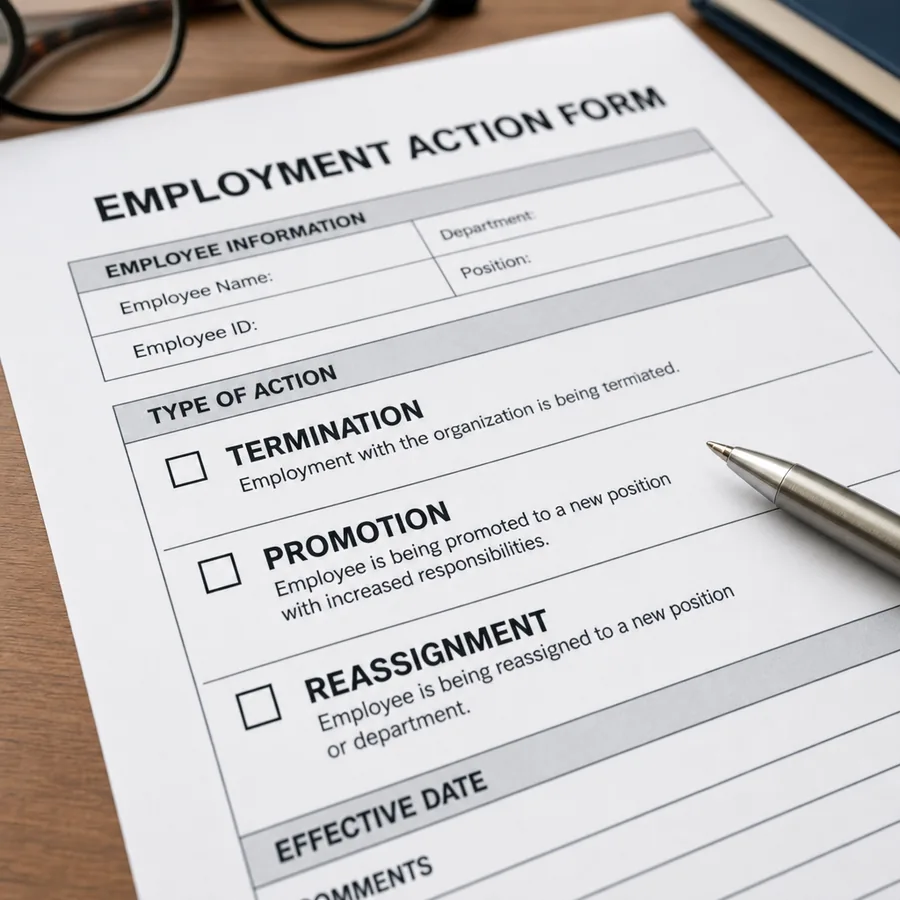
Under Vance, an employee is a supervisor for Title VII vicarious-liability purposes only when the employer empowers that person to take tangible employment actions against the victim.
The Court defined tangible employment actions as decisions that effect "a significant change in employment status," including:
- Hiring
- Firing
- Failing to promote
- Reassignment with significantly different responsibilities
- Decisions causing a significant change in benefits
If your harasser can't do any of those things to you, Vance says they're a co-worker—even if they run your day-to-day work life.
What Doesn't Make Someone a Supervisor After Vance
The Vance decision explicitly rejected a laundry list of powers that used to support supervisor status in many circuits.
Assigning daily tasks? Not enough.
Controlling your work schedule or approving leave? Not enough.
Directing which projects you work on or monitoring the quality of your work? Not enough.
Providing input into your performance evaluation or making recommendations about your raise? Not enough.
The Court reasoned that these powers are "readily distinguishable" from the ability to cause an economic harm through a tangible employment action. The majority opinion worried that a broader test would leave employers "in the dark" about when they faced vicarious liability.
Now, here's where it gets interesting:
The dissent (Ginsburg, Breyer, Sotomayor, and Kagan) argued the majority's rule ignored workplace realities. Many harassment victims work under a "lead" or senior co-worker who exercises significant control over their work environment but lacks formal hire/fire authority. The dissent warned that Vance would insulate employers from liability in precisely those cases.
How Vance Determines Employer Liability: The Three-Tier Framework

After Vance, harassment liability follows a clear hierarchy based on who did the harassing and what they did.
Tier 1: Supervisor harassment with a tangible employment action.
If your harasser is a Vance supervisor and took a tangible employment action against you (fired you, demoted you, reassigned you to a worse shift), the employer is strictly liable. No affirmative defense. The employer is on the hook, period.
Tier 2: Supervisor harassment creating a hostile environment, no tangible action.
If your harasser is a Vance supervisor but didn't take a tangible employment action—just made your workplace hell through words and conduct—the employer is presumptively liable. It can escape liability only by proving the Faragher-Ellerth affirmative defense: that it took reasonable care to prevent harassment and you unreasonably failed to use its complaint system.
Tier 3: Co-worker harassment.
If your harasser is not a Vance supervisor—just a peer or a lead without tangible-action authority—the employer is liable only if you prove it was negligent. You must show the employer knew or should have known about the harassment and failed to take prompt, appropriate corrective action.
This framework explains why employers fight so hard over the supervisor label.
Applying Vance: Who Has Tangible-Action Authority in Your Workplace?

The practical question is: who in your organization is empowered to make hiring, firing, promotion, demotion, and reassignment decisions?
In large organizations, that's often a narrower group than you think.
Your direct manager might recommend your termination, but if HR or a senior director must approve it, courts split on whether your manager holds the necessary authority. The safer employer argument is that only the final decision-maker counts.
But it gets better:
Some courts have found Vance supervisor status where a manager had de facto authority to take tangible actions even without a formal title. If your team lead's termination recommendations are rubber-stamped 100% of the time, a court might find the lead effectively holds firing authority.
The inverse is also true. A "manager" title doesn't create supervisor status if that manager lacks actual power to affect your job status.
Vance focuses on the substance of authority, not the label on someone's business card.
Why Vance Matters for Your Case Strategy
If you're evaluating a harassment claim, the Vance classification often determines whether your case survives summary judgment.
When the harasser is a Vance supervisor, you can survive summary judgment by showing the harassment occurred. The burden shifts to the employer to prove its affirmative defense, which usually requires evidence of an anti-harassment policy, training, and your failure to use the complaint process.
When the harasser is a co-worker, you need evidence the employer knew. That means emails to HR, witness testimony about complaints to management, or a track record of similar incidents. Without that proof, summary judgment is likely.
The distinction also affects settlement value. Vicarious liability cases—where the employer can't escape responsibility—settle for materially higher amounts than negligence cases where the employer has a credible "we didn't know" defense.
The Intersection With Other Doctrines: Vance and Materially Adverse Actions
Don't confuse Vance's "tangible employment action" with the "materially adverse action" standard from retaliation cases.
Vance asks whether the harasser could take certain employment actions to determine employer liability for harassment.
The materially-adverse standard from Burlington Northern asks whether the employer's response to your protected activity was harmful enough to deter a reasonable person—a separate question that governs retaliation claims, not harassment liability.
In practice, you might see both doctrines in the same case. If a Vance supervisor harassed you and then retaliated when you complained, you'd argue vicarious liability for the harassment and apply the Burlington Northern standard to the retaliation claim.
But the two tests serve different purposes and apply to different elements of your case.
The Criticism: What Vance Got Wrong (According to Four Justices)
The Vance dissent argued the majority created a rule divorced from workplace reality.
Justice Ginsburg wrote that in many work settings, front-line supervisors wield immense power over employees' working conditions without holding formal hire-fire authority. Crew chiefs, shift leads, and senior technicians often decide who gets desirable assignments, who works overtime, and who gets written up for minor infractions.
Under Vance, none of that matters for vicarious liability unless the person can pull the trigger on a termination or demotion.
The dissent predicted—correctly—that the decision would make it harder for harassment victims to hold employers accountable, particularly in industries where day-to-day authority is diffused across team leads without formal titles.
Lower courts have echoed this concern. But Vance remains binding Supreme Court precedent, and absent congressional amendment to Title VII, the narrow definition controls.
Frequently Asked Questions
Does Vance apply to all workplace harassment cases?
Vance v. Ball State University interprets Title VII of the Civil Rights Act of 1964, so it governs federal-law claims of harassment based on race, color, religion, sex, or national origin. Many state anti-discrimination laws adopt similar frameworks, but some states have expressly rejected Vance and use broader supervisor definitions. The rule in your jurisdiction depends on whether you're bringing a federal or state claim.
What if my harasser had the power to recommend my termination but not approve it?
Courts are split. The safest employer argument post-Vance is that only final decision-making authority counts. But some circuits recognize that if a subordinate manager's recommendations are routinely followed without independent review, that manager may effectively hold tangible-action authority. The analysis turns on how much deference higher-ups give to the recommender's input.
Can a company avoid vicarious liability by giving managers fancy titles but no real authority?
No. Vance focuses on the authority the employer actually delegates, not on titles. If someone is called a "supervisor" but can't hire, fire, demote, or significantly reassign employees, they're not a Vance supervisor. Conversely, if someone lacks a supervisory title but holds real power to take tangible employment actions, courts can find supervisor status based on functional authority.
Does Vance change what counts as harassment or a hostile work environment?
No. Vance addresses only who the harasser is for purposes of determining employer liability. The standards for what conduct is severe or pervasive enough to create a hostile work environment remain unchanged. Vance doesn't make it harder to prove harassment happened; it makes it harder to hold the employer vicariously liable when the harasser is a co-worker rather than someone with hire-fire power.
If my harasser was a co-worker under Vance, can I still win my case?
Yes, but you must prove negligence. You'll need to show the employer knew or should have known about the harassment and failed to take prompt, appropriate corrective action. Evidence of prior complaints, witness testimony that management observed the conduct, or a pattern of similar incidents can satisfy this burden. Co-worker harassment cases are harder to win at summary judgment, but they're not impossible if you have strong evidence the employer dropped the ball.