EEOC, NLRB, OSHA, FLSA: Why You Don't Have to Choose

You complained about unpaid overtime—then got fired the next week.
Your manager says it's a performance issue. You know it's retaliation.
Here's the thing: that one act of retaliation may have violated four different federal statutes at the same time. The Fair Labor Standards Act (FLSA). Title VII if your complaint mentioned gender-based pay gaps. The National Labor Relations Act (NLRA) if you discussed wages with coworkers. And your state's whistleblower statute.
Most people assume they have to pick one complaint mechanism and stick with it. They don't.
The Core Principle: One Act, Many Violations
Employment retaliation doesn't fit into neat statutory boxes.
When your supervisor demotes you for reporting safety violations, that single demotion may violate:
- The Occupational Safety and Health Act (OSHA) §11(c), which prohibits retaliation for raising workplace-safety concerns
- Title VII of the Civil Rights Act, if the unsafe condition disproportionately affected workers of a particular race or sex
- The National Labor Relations Act (NLRA) §8(a)(1), if you discussed the safety issue with coworkers in a way that qualifies as "concerted activity"
- Your state's public-policy tort, if your state recognizes wrongful discharge for safety complaints
Each statute establishes an independent right. Each has its own enforcement agency. And here's the critical point: each statute's right exists regardless of whether another statute also applies.
Federal courts call this "concurrent jurisdiction." The term means exactly what it sounds like: multiple legal regimes run at the same time, side by side, over the same conduct.
Why Parallel Filings Matter: Statutes of Limitations and Evidence

Filing in multiple forums isn't just legally permissible—it's often strategically essential.
Here's why.
Different Deadlines for Different Statutes
Each statute imposes its own deadline for filing a complaint:
- Title VII complaints must be filed with the EEOC within 180 days (or 300 days in "deferral states" with their own anti-discrimination agencies)
- OSHA §11(c) complaints must be filed within 30 days for most industries, or 180 days for certain sectors like aviation and nuclear
- NLRA unfair-labor-practice charges must be filed with the NLRB within six months of the alleged violation
- State tort claims may carry statutes of limitation ranging from one to four years, depending on the state
If you file only with the EEOC and that 180-day window closes, you've lost your Title VII claim forever—even if the same facts would have supported an OSHA complaint with a 30-day deadline you didn't know existed.
Parallel filings preserve every claim against every deadline.
Different Procedures Uncover Different Evidence
Each agency operates under different procedural rules, and those differences shape what evidence surfaces.
The EEOC conducts an administrative investigation. It interviews witnesses, requests documents, and may issue a "reasonable cause" determination that becomes public record. That determination can be powerful evidence in a later lawsuit—but you only get it if you file with the EEOC.
The NLRB, by contrast, acts as a prosecutor. If the regional office finds merit in your charge, it issues a complaint and litigates the case itself before an administrative law judge. You don't control the litigation, but you also don't pay for it. The NLRB's subpoena power often compels production of internal emails and policies that employers resist disclosing in EEOC investigations.
OSHA §11(c) investigations are handled by the Department of Labor's Wage and Hour Division in some regions, by OSHA investigators in others. They focus narrowly on whether the complainant engaged in protected safety activity and whether the employer took adverse action because of it. The timeline is faster than EEOC or NLRB proceedings, which can yield early leverage.
State agencies and state-court litigation each carry their own discovery rules and procedural advantages.
By filing in parallel, you let each forum do what it does best.
The Garmon Rule and When One Forum Must Defer
Now, here's where it gets more complex.
While you can file parallel claims, certain overlaps trigger jurisdictional rules that require one forum to defer to another.
The most important of these is the Garmon doctrine, named after a series of Supreme Court cases about NLRA preemption.
The basic rule: if conduct is "arguably protected" by §7 of the NLRA (the section guaranteeing employees' right to engage in concerted activity) or "arguably prohibited" by §8 (the section outlawing unfair labor practices), then the NLRB has primary jurisdiction, and state courts generally must defer.
But Garmon preemption has limits. It does not bar federal statutory claims like Title VII or OSHA. It applies only to state-law claims that tread on conduct the NLRA was designed to regulate.
So if you file an NLRB charge alleging that your termination violated §8(a)(1) because you discussed wages with a coworker, and you also file a state wrongful-discharge claim based on the same facts, the state court may dismiss under Garmon and tell you to exhaust your NLRB remedies first.
But if you file that same NLRB charge and a Title VII charge alleging that the "discussion of wages" was actually a complaint about gender-based pay discrimination, both claims proceed. Title VII and the NLRA operate concurrently. Neither preempts the other.
Garmon v. National Railroad Passenger Corp.: Parallel EEOC and Grievance Proceedings
The cleanest illustration of concurrent jurisdiction comes from the First Circuit's 2016 decision in Garmon v. Nat'l R.R. Passenger Corp., 844 F.3d 307 (1st Cir. 2016).
Raymond Garmon worked for Amtrak. He filed a charge with the EEOC alleging race discrimination and retaliation under Title VII. He also pursued an internal grievance through Amtrak's grievance process, which culminated in arbitration.
Amtrak argued that Garmon's pursuit of both forums barred his Title VII lawsuit. The company claimed that by choosing arbitration, Garmon had "elected his remedy" and waived his right to litigate in federal court.
The First Circuit rejected that argument entirely.
The court held that an employee may pursue parallel proceedings under Title VII and an employer's internal grievance process without waiving rights in either forum.
The key reasoning: Title VII creates an independent federal statutory right. That right does not evaporate simply because the employee also invokes a contractual grievance mechanism. The two forums address overlapping facts, but they enforce different legal sources—one statutory, one contractual.
The court noted that issue preclusion (also called collateral estoppel) could apply if the arbitrator made specific factual findings that a later court adopted. But absent a final, binding arbitral ruling on the precise issues in the Title VII case, the employee retained the right to litigate both.
Put simply: filing in one forum does not forfeit your right to file in another, as long as the legal theories rest on independent statutory or contractual grounds.
How Concurrent Jurisdiction Works Across EEOC, NLRB, OSHA, and State Forums
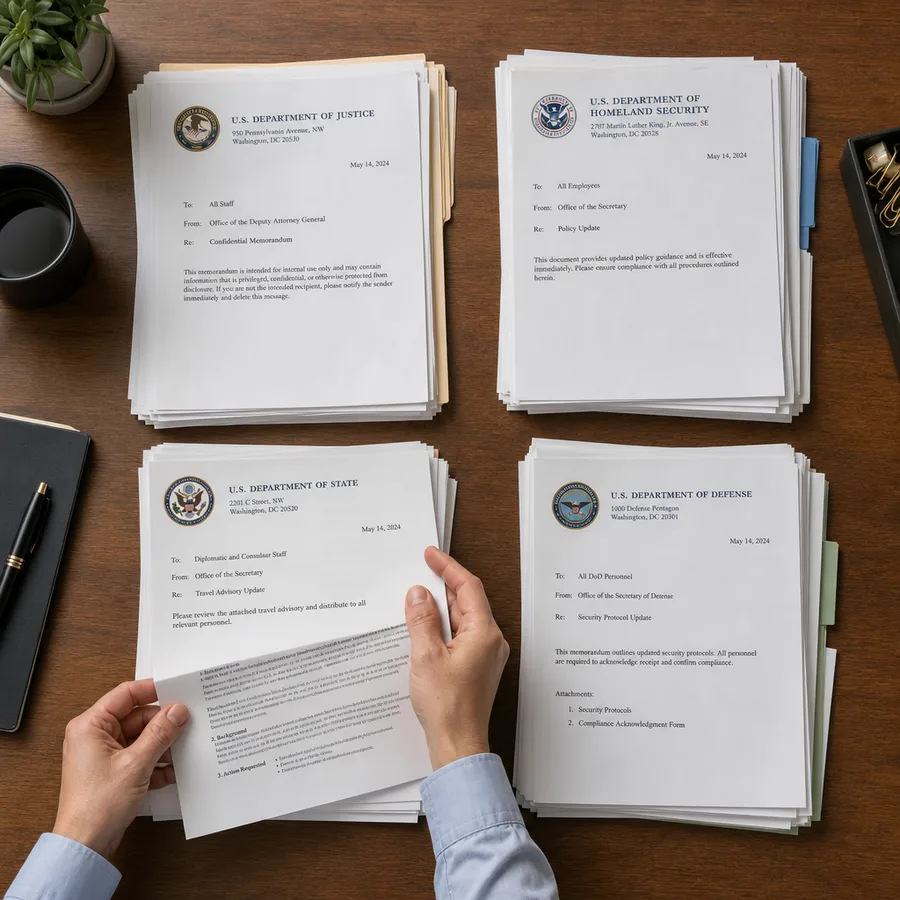
Let's walk through a concrete example.
You work as a line supervisor at a chemical plant. You notice that protective equipment isn't being distributed to workers on the night shift. You email your manager and the site safety officer describing the problem.
Two weeks later, you're placed on a performance-improvement plan you've never heard of before. A month after that, you're terminated for "failure to meet performance standards."
Here's what you can file, all at the same time:
- OSHA §11(c) complaint with the Department of Labor, alleging retaliation for raising a safety concern (30-day deadline from termination)
- NLRB unfair-labor-practice charge under §8(a)(1), alleging retaliation for engaging in concerted activity (if you copied coworkers on the email or discussed the issue with them)—six-month deadline
- EEOC charge under Title VII if the lack of protective equipment disproportionately affected workers of a particular race or sex, or if you can tie the retaliation to a protected characteristic—180- or 300-day deadline depending on state
- State whistleblower complaint if your state statute protects employees who report safety violations—varies by state
None of these filings blocks the others. Each agency investigates independently. Each applies its own substantive test for retaliation.
If OSHA finds in your favor, that finding does not bind the NLRB or the EEOC—but it can be introduced as persuasive evidence in those proceedings. If the NLRB issues a complaint and schedules a hearing, you can use the NLRB's subpoena process to gather documents that will help your EEOC case.
This is concurrent jurisdiction in action.
When Does Issue Preclusion Apply?
The main risk of parallel filings is issue preclusion.
Issue preclusion (sometimes called "collateral estoppel") means that once a court or agency makes a final determination on a specific factual or legal issue, that determination binds the parties in later proceedings involving the same issue.
Example: if an NLRB administrative law judge holds a hearing, takes testimony, and rules that you were not terminated for discussing wages but for legitimate performance reasons, that finding may preclude you from re-litigating the "reason for termination" issue in your later Title VII lawsuit—depending on how your jurisdiction applies preclusion rules to administrative findings.
But preclusion is issue-specific. A finding that you weren't fired for wage discussions doesn't preclude a claim that you were fired for complaining about race discrimination, even if both complaints happened in the same email.
And preclusion applies only to issues that were actually litigated and necessary to the judgment. If OSHA dismisses your complaint on procedural grounds without reaching the merits, that dismissal has no preclusive effect on your EEOC charge.
How This Doctrine Relates to Other Retaliation Frameworks
Concurrent jurisdiction intersects with two other important doctrines in employment-retaliation law.
First, it complements the materially-adverse-action standard from Burlington Northern v. White. That case established that Title VII's anti-retaliation provision covers a broader range of employer actions than the underlying discrimination provisions. When you file parallel OSHA and Title VII claims, you can argue that the same adverse action meets OSHA's narrow standard (actions affecting "terms and conditions of employment") and Title VII's broader "materially adverse" test. Burlington v. White: The Materially-Adverse Standard, Explained walks through how courts apply that framework.
Second, concurrent jurisdiction clarifies when you need to exhaust administrative remedies and when you don't. Title VII requires EEOC exhaustion. OSHA requires filing with the Department of Labor. But §1981 claims—based on race discrimination rooted in the Civil Rights Act of 1866—require no administrative filing at all. You can proceed straight to federal court. Understanding which statutes allow direct filing helps you decide which forums to use in parallel. See §1981 vs. Title VII: When You Can Skip the EEOC for the full breakdown.
Practical Considerations When Filing in Multiple Forums
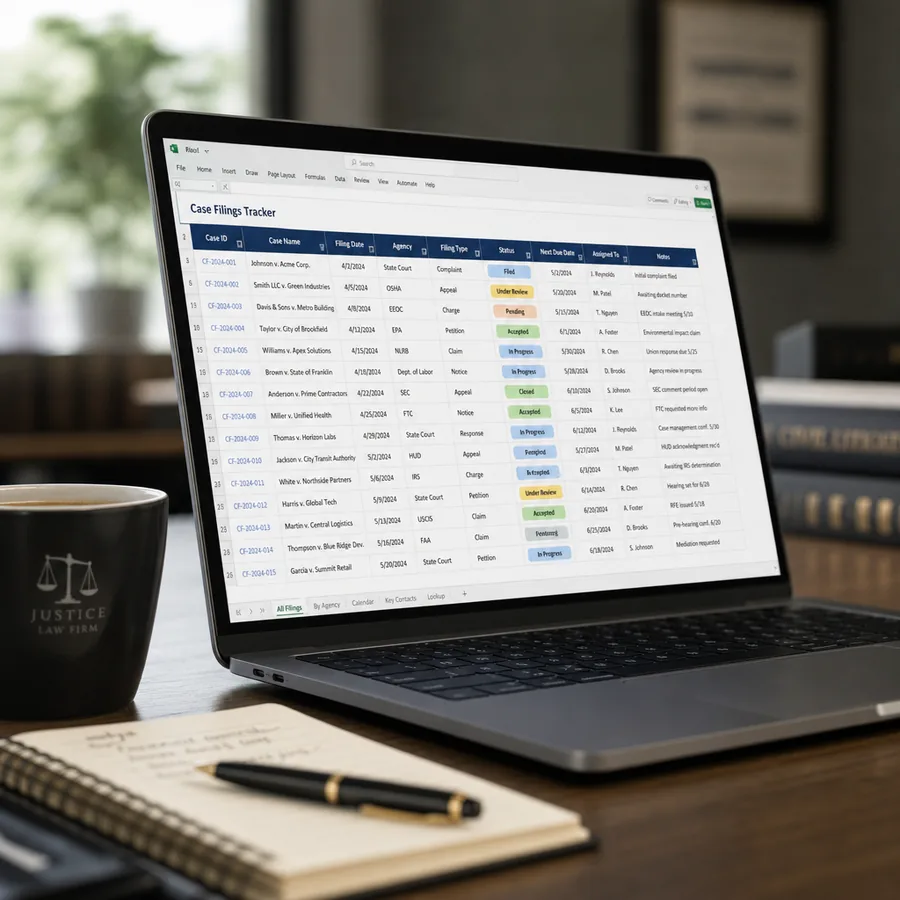
Filing in parallel requires careful coordination.
Here are the key practical points:
Consistent Factual Allegations
Each filing should describe the same core facts. Inconsistent timelines, conflicting descriptions of who said what, or contradictory characterizations of your job duties will be used against you in every forum.
You don't need to copy-paste the same narrative into every charge. Different agencies use different intake forms and ask different questions. But the underlying story—what you did, what happened, when it happened—must align.
Notify Each Agency of Parallel Filings
Most agencies do not automatically check whether you've filed elsewhere. If the EEOC schedules mediation and you accept a settlement, that settlement may require you to withdraw all other pending claims. If you didn't tell the NLRB about the EEOC mediation, you could inadvertently breach the settlement by maintaining the NLRB charge.
Include a brief statement in each filing: "I am also pursuing this matter through [agency name] under [statute name]."
Understand Remedy Limitations
Even though you can file in multiple forums, you can't recover duplicative remedies.
If the NLRB orders Amtrak to pay you $50,000 in back pay, and you later win a Title VII lawsuit awarding $50,000 in back pay for the same lost wages during the same period, you don't get $100,000. The court will offset one award against the other.
But different forums offer different types of relief. The NLRB can order reinstatement and post-reinstatement back pay. Title VII allows compensatory damages for emotional distress and, in some cases, punitive damages. OSHA can impose civil penalties on the employer but generally cannot award damages to you beyond make-whole relief. A state tort claim might allow damages the federal statutes exclude.
Filing in parallel preserves access to the full menu of possible remedies.
Frequently Asked Questions
If I file with both the EEOC and the NLRB, will one agency wait for the other to finish before investigating?
No. Agencies generally proceed on their own timelines unless a formal request to stay proceedings is made and granted. The EEOC and NLRB do not coordinate automatically. Each will investigate independently, and each may reach a different conclusion based on the different legal standards they apply.
Can my employer argue that filing in multiple forums is "forum shopping" and get my claims dismissed?
Employers frequently make that argument. Courts routinely reject it. Forum shopping refers to manipulating procedural rules to gain an unfair advantage. Filing charges under multiple statutes that independently apply to the same facts is not forum shopping—it's the exercise of rights Congress created when it enacted overlapping employment-protection statutes.
Does filing an OSHA complaint stop the clock on my EEOC or NLRB deadlines?
No. Each statute's limitations period runs independently. Filing with OSHA does not toll (pause) the Title VII or NLRA deadlines. You must file each charge within that statute's own deadline, regardless of what you've filed elsewhere.
If I win my NLRB case, does that automatically mean I'll win my EEOC case?
Not necessarily. The legal standards differ. The NLRB applies the "concerted activity" framework under the NLRA. The EEOC applies Title VII's prohibition on discrimination and retaliation based on protected characteristics. You could prevail on one theory and lose on the other, depending on the evidence and how each agency weighs it.
What happens if I settle one claim but want to continue pursuing the others?
Settlement agreements almost always include a release of claims. The scope of that release determines what you give up. A narrowly drafted release might cover only the claims in that specific forum. A broad release might cover "any and all claims arising out of your employment," which would bar you from pursuing parallel filings. Read settlement language carefully, and understand that once you sign a release, you cannot revive claims it covers—even if those claims were filed in a different forum.