Assaulted at Work and Management Did Nothing? Court Patterns

You were assaulted at work. You reported it immediately. And then… management shrugged.
No investigation. No discipline. Sometimes not even a conversation with the person who attacked you.
Here's what you need to understand: when employers fail to respond to workplace violence—especially when a supervisor or manager is involved—a critical legal shield called the Faragher-Ellerth defense often crumbles. And when that happens, the employer's exposure skyrockets.
In this article, you'll learn:
- How the Faragher-Ellerth affirmative defense works and when it applies to assault cases
- The two prongs employers must prove—and why inadequate responses cause automatic failure
- What courts actually examine when evaluating whether management "did enough" after a physical attack
The Faragher-Ellerth Framework: What It Is and Why Employers Love It
The Faragher-Ellerth defense comes from two companion Supreme Court cases decided the same day in 1998: Faragher v. City of Boca Raton, 524 U.S. 775 (1998), and Burlington Industries, Inc. v. Ellerth, 524 U.S. 742 (1998).
Both cases established the same rule: when a supervisor creates a hostile work environment but doesn't take a "tangible employment action" (like firing you or demoting you), the employer is still presumed liable.
But—and this is the critical part—the employer can escape liability by proving two things:
- The employer exercised reasonable care to prevent and promptly correct the harassing behavior, AND
- The employee unreasonably failed to use the employer's preventive or corrective opportunities.
It's an affirmative defense. The employer carries the burden of proof on both prongs.
If the employer fails on either prong, the defense collapses.
When Does the Defense Apply to Workplace Assault?
Here's where it gets interesting:
The Faragher-Ellerth framework only applies when the harasser is a supervisor.
The Supreme Court clarified this in Vance v. Ball State University, 570 U.S. 421 (2013): a "supervisor" is someone empowered by the employer to take tangible employment actions—hiring, firing, demoting, reassigning with significantly different responsibilities, or decisions causing significant changes in benefits.
If your assailant was a coworker with no supervisory authority over you, different rules apply. The employer is liable only if management knew (or should have known) about the misconduct and failed to take prompt, effective remedial action.
But when a supervisor assaults you?
The employer is presumptively on the hook—unless it can prove the two-prong Faragher-Ellerth defense.
Prong One: Did the Employer Exercise "Reasonable Care"?
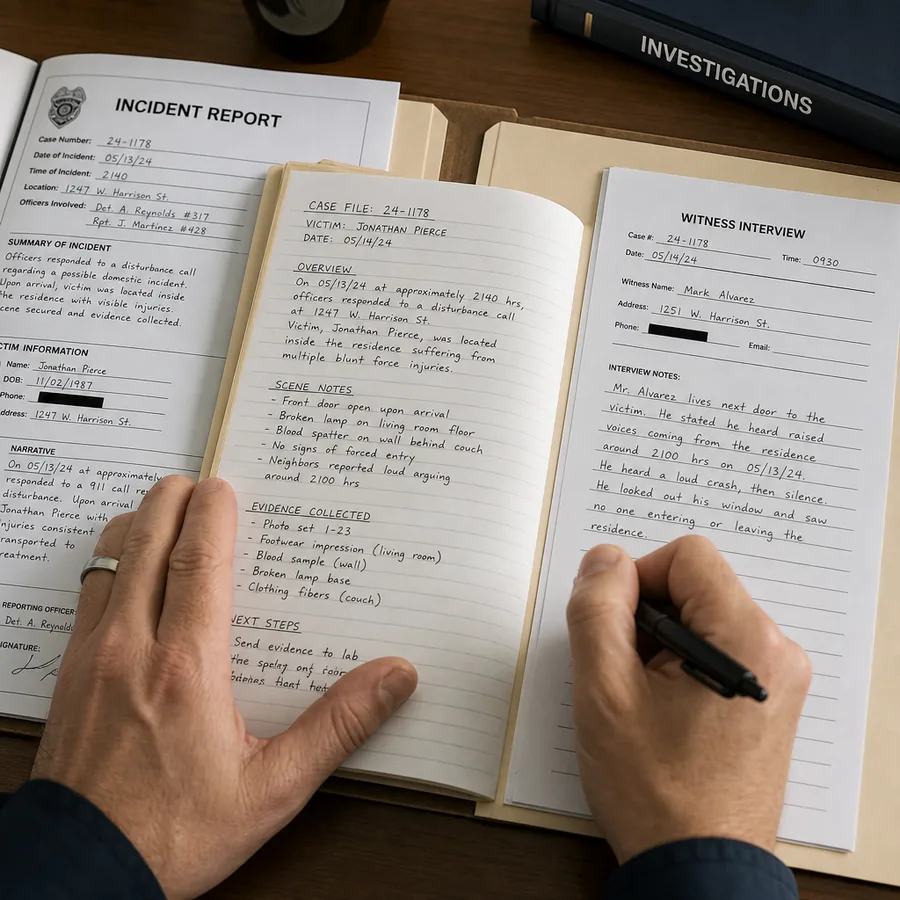
The first prong asks whether the employer took reasonable steps to prevent and promptly correct harassment.
Courts break this into two components: prevention (what the employer did before the assault) and correction (what the employer did after).
Prevention: Policies and Training
On the prevention side, courts typically examine:
- Did the employer have a written anti-harassment policy?
- Did that policy cover physical violence, or only verbal harassment?
- Did the employer communicate the policy to employees?
- Did the employer provide training on reporting procedures?
Most large employers clear this bar easily. They have handbooks. They have annual online trainings. They can point to signed acknowledgment forms.
But here's the thing:
Having a policy isn't enough if the employer doesn't follow it.
Correction: What Happened After You Reported
This is where the defense typically fails in assault cases.
Courts ask: once the employer learned of the assault, did it respond promptly and effectively?
Promptly means quickly—days, not weeks. Delays of even 10–14 days can be fatal to the defense when the misconduct involves physical violence.
Effectively means the corrective action was reasonably calculated to stop the harassment and prevent recurrence.
What does "effective" look like?
- A thorough, impartial investigation that interviews witnesses and documents findings.
- Discipline proportionate to the severity of the conduct—up to and including termination.
- Separation of the victim and assailant (not by forcing the victim to transfer).
- Clear communication to the victim about what corrective action was taken.
- Follow-up to ensure no retaliation and no recurrence.
Now, here's where it gets better:
Courts have repeatedly found that no response or minimal response to a physical assault fails prong one as a matter of law.
What "Did Nothing" Actually Looks Like in Court Records
You'd be surprised how often employers genuinely do nothing—or close to it.
Here are response patterns courts have found inadequate:
The "We'll Keep an Eye on It" Response: Manager acknowledges the complaint, promises to monitor the situation, but conducts no investigation and imposes no discipline.
The "Informal Chat" Response: Manager speaks to the assailant informally, doesn't document the conversation, doesn't interview witnesses, and doesn't follow up.
The "Both Sides" Response: Employer treats a physical assault as a "personality conflict" and counsels both victim and assailant equally, as if mutual blame exists.
The Delayed Investigation: Employer waits weeks or months to begin investigating, often only after the victim escalates the complaint or threatens legal action.
The Punishment Mismatch: Employer confirms the assault occurred but imposes discipline grossly disproportionate to the severity—like a written warning for a physical attack that left bruises or required medical attention.
The Victim-Reassignment Solution: Employer moves the victim to a different shift, location, or role to "solve" the problem, while the assailant remains in place unpunished.
Each of these fails the "reasonable care to correct" standard.
Prong Two: Did You "Unreasonably Fail" to Use the Employer's Procedures?
Even if the employer's response was inadequate, it might still try to argue prong two: that you acted unreasonably by not using available complaint procedures.
This argument almost never works in assault cases where you did report.
If you filed a formal complaint through HR, told your manager, or used the company's hotline, you satisfied your obligation. The employer can't claim you "failed to complain" when you literally complained.
Courts have held that once an employee reports harassment, the burden shifts entirely to the employer to investigate and correct. The employee has no duty to escalate repeatedly, file multiple complaints, or bypass an ineffective investigation by going over HR's head.
The only scenario where prong two typically defeats a plaintiff is when the employee never reported at all despite knowing a complaint mechanism existed—and even then, courts recognize exceptions for fear of retaliation, past evidence that complaints go ignored, or power dynamics that made reporting impractical.
Why Inadequate Response Matters So Much in Settlement Negotiations
When the Faragher-Ellerth defense fails, the entire liability landscape shifts.
Without the defense, the employer faces strict vicarious liability for the supervisor's conduct. The employer can't argue "we had good policies" or "we didn't know." If the court finds the supervisor created a hostile environment, the employer is liable—period.
This dramatically increases settlement value.
Employers understand that losing the affirmative defense means:
- Greater likelihood of surviving summary judgment and going to trial.
- Jury instructions that presume employer liability.
- Potential for significant compensatory damages (emotional distress, medical expenses) and punitive damages.
- Attorney's fees exposure under Title VII's fee-shifting provisions.
That's why detailed documentation of the employer's inadequate response is so powerful. Every email you sent that went unanswered, every follow-up meeting that led nowhere, every week that passed without discipline—it all feeds directly into defeating prong one.
Special Considerations for Customer or Third-Party Assaults
What if the person who assaulted you wasn't an employee at all—but a customer, vendor, or other third party?
The Faragher-Ellerth framework doesn't apply, because the assailant isn't a supervisor (or even a coworker).
But the employer can still be liable under a negligence theory if it knew or should have known about the danger and failed to take reasonable steps to protect you.
Courts ask:
- Had this customer been violent or threatening before?
- Did you report prior incidents or concerns?
- Did the employer have security measures in place appropriate to the risk level of the work environment?
- After the assault, did the employer ban the customer, increase security, or take other protective steps?
The employer's duty is to provide a reasonably safe workplace. Repeated exposure to a known violent customer without protective measures can create liability—even though the Faragher-Ellerth defense is off the table.
What Courts Actually Examine in the "Adequacy" Analysis
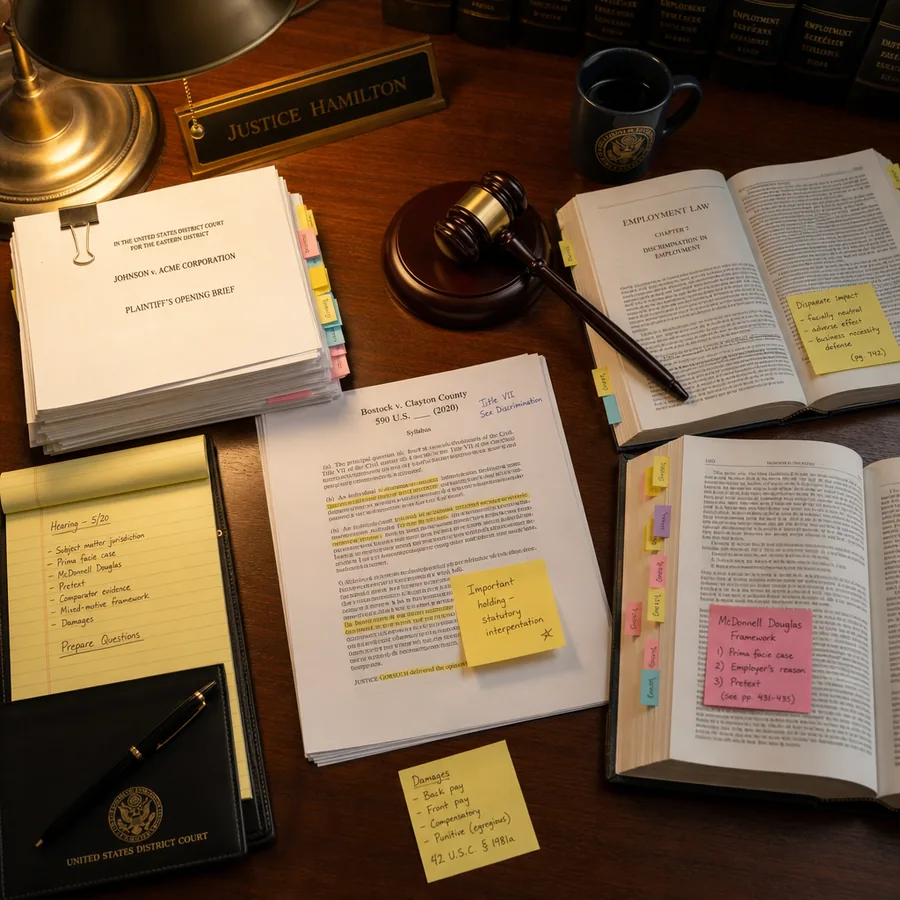
When a court evaluates whether an employer's response was adequate, it looks at the totality of the circumstances.
Key factors include:
Timeliness: How quickly did the investigation begin after the report? How long did it take to reach a conclusion and impose discipline?
Thoroughness: Did the employer interview all relevant witnesses? Review video footage, medical records, or other physical evidence? Document its findings in writing?
Impartiality: Was the investigator neutral, or did they have a prior relationship with the assailant? Did the employer credit your account, or dismiss it without meaningful inquiry?
Proportionality: Was the discipline reasonably calibrated to the severity of the assault? Courts are skeptical of "one size fits all" progressive-discipline policies applied to violent conduct.
Communication: Did the employer inform you of the outcome? (You're not entitled to every detail of another employee's personnel action, but you are entitled to know whether corrective action was taken and whether you're safe.)
Follow-Up: Did the employer check in with you afterward? Monitor for retaliation? Ensure the hostile environment actually stopped?
Failure on any one factor isn't necessarily fatal. But a pattern of failures—delayed response plus cursory investigation plus minimal discipline—makes prong one impossible to prove.
Documentation That Defeats the Defense
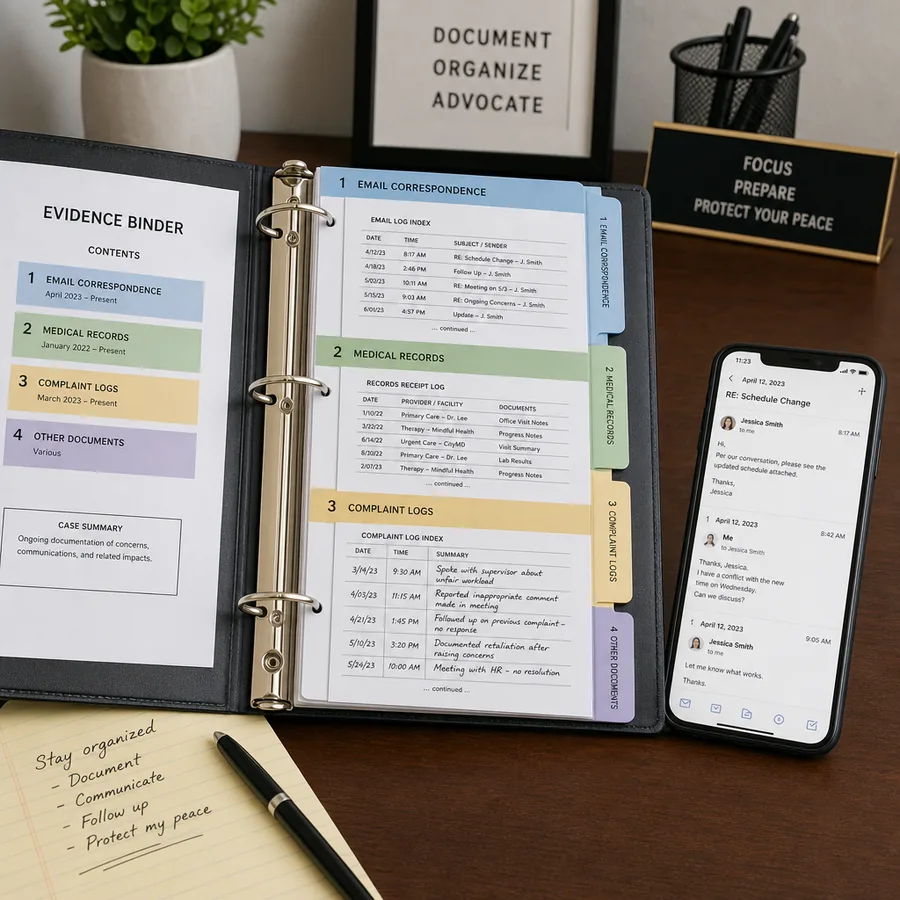
If you're in this situation, the records you preserve now become critical evidence later.
Here's what matters:
- Your initial complaint: Date, time, to whom you reported, how (email, verbal, formal HR form). If verbal, follow up in writing to create a timestamp.
- Medical records: If you sought treatment for injuries, those records corroborate severity and create an independent timeline.
- Witness statements: If coworkers saw the assault or its aftermath, their contact information is gold. Employers often "lose track" of witnesses during investigation delays.
- Follow-up communications: Every email asking "what's happening with my complaint?" Every voicemail left for HR. Every meeting where you were told "we're looking into it."
- Lack of communication: Document the silence. "I reported on [date]. It's now [date]. I haven't heard anything."
- Continued exposure: If you're still working alongside your assailant, note each shift, each interaction, each time you asked for separation and were denied.
This paper trail is how you prove the employer didn't exercise reasonable care to correct. It turns "we investigated promptly" into a factual dispute you can win.
When "We Fired Them" Isn't Enough
Some employers think terminating the assailant automatically satisfies the Faragher-Ellerth defense.
It doesn't—not if the termination came too late.
If the employer waited weeks or months to fire the assailant, during which time you were forced to continue working in a hostile environment, the delay itself can defeat the defense.
Courts have found inadequate responses even when the assailant was eventually terminated, if:
- The termination happened only after the victim hired a lawyer or filed an EEOC charge.
- The employer conducted no investigation for weeks, leaving the victim and assailant in proximity.
- The employer initially imposed lesser discipline (suspension, warning), and only escalated to termination after public pressure or additional incidents.
"Prompt and effective" means prompt. A good outcome delivered late is still a failed corrective response under Faragher-Ellerth.
FAQ: Workplace Assault and the Faragher-Ellerth Defense
Does the Faragher-Ellerth defense apply if my assailant was a coworker, not a supervisor?
No. The Faragher-Ellerth affirmative defense only applies when the harasser is a supervisor—someone empowered to take tangible employment actions like firing, demoting, or reassigning you. For coworker harassment, the employer is liable only if it knew or should have known about the misconduct and failed to take prompt, effective remedial action. Different standard, but inadequate response still creates liability.
What if I didn't report the assault immediately—can the employer still use the defense?
Timing of your report affects prong two (whether you unreasonably failed to use complaint procedures), but courts recognize many legitimate reasons for delayed reporting: fear of retaliation, trauma, belief that informal resolution might work, or past evidence that complaints go ignored. If you did eventually report and the employer's response was inadequate, prong one can still fail regardless of the delay. The analysis is fact-specific.
How long is "too long" for an employer investigation after a workplace assault?
There's no bright-line rule, but courts have found delays of 10–14 days problematic when the misconduct involves physical violence. The more severe the assault, the faster the response must be. An investigation that takes weeks—especially with no interim protective measures—often fails the "promptly correct" prong. Context matters: a complex multi-witness investigation needs more time than a clear-cut incident with video evidence.
Can an employer satisfy the Faragher-Ellerth defense by separating me from my assailant if they transfer me instead of the assailant?
Generally, no. Courts view victim reassignment as punishing the wrong person. Effective corrective action should remove or discipline the harasser, not force the victim to change shifts, locations, or job duties. If you were involuntarily transferred while your assailant remained in place with no discipline, that weighs heavily against the employer on prong one—it's not "reasonable care to correct."
If the employer eventually fired my assailant but it took two months, does that defeat the defense?
Possibly. Courts evaluate the entire response timeline. If you were forced to work alongside your assailant for two months while the employer "investigated," that delay can defeat the "prompt" correction requirement—even if the ultimate discipline (termination) was appropriate. The harm is the ongoing hostile environment during the delay. Interim measures matter: Did the employer at least separate you during the investigation? Provide leave? Ensure no contact?