Forced Early Lunch Breaks & Unpaid Overtime: What Courts Require
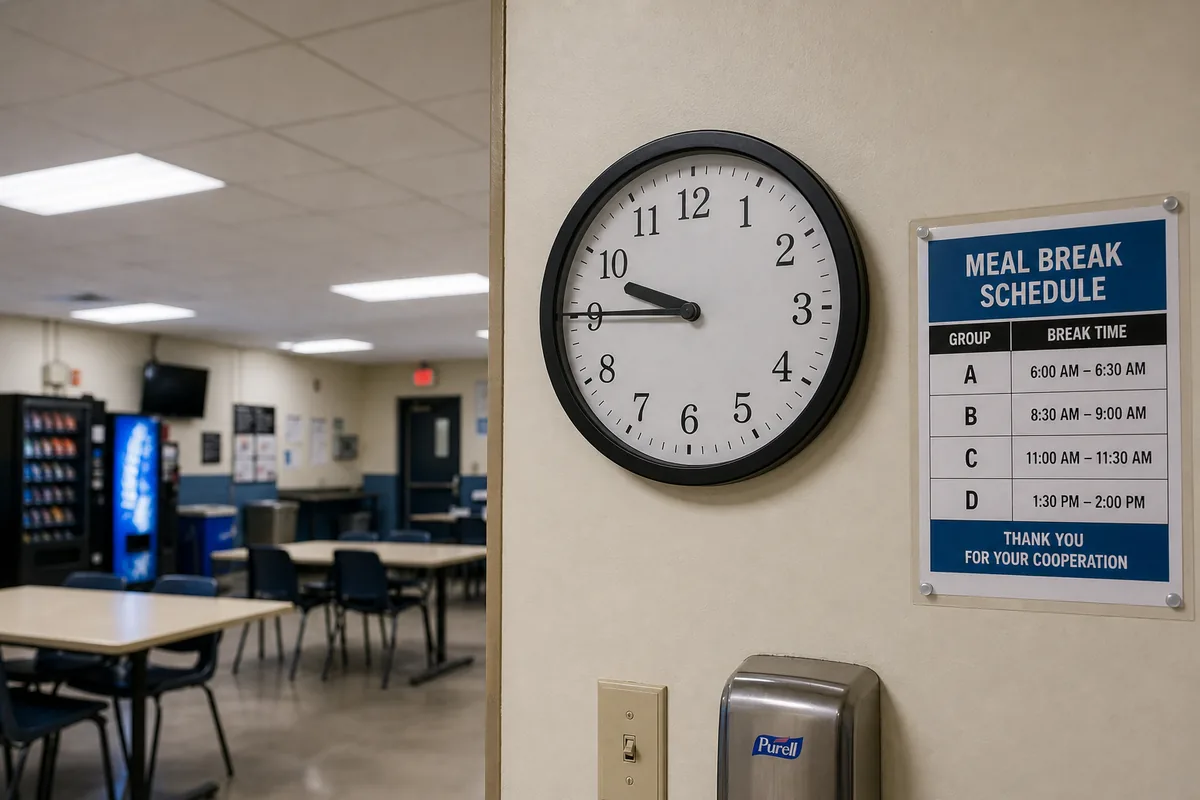
You clock in at 8:00 AM. At 8:45 AM, your manager tells you to take your 30-minute lunch break—even though you just started.
Or maybe your timesheet shows exactly 40 hours every week, but you know you stayed late three nights in a row.
You're not imagining it. And courts take these wage-and-hour violations seriously—but only if you can prove them.
This article shows you what federal employment courts actually look for when employees claim forced early meal breaks, unpaid overtime, or off-the-clock work. You'll learn why the timing of your documentation matters as much as the documentation itself, and which records judges trust most under the Fair Labor Standards Act (FLSA).
Here's what we'll cover:
- Why courts weigh contemporaneous records far more heavily than after-the-fact reconstructions
- What makes employer timekeeping systems admissible—or excludable—as evidence
- How employees successfully proved unpaid hours when company records contradicted their claims
The FLSA's Core Wage-Hour Protections
The Fair Labor Standards Act requires employers to pay overtime at one-and-a-half times your regular rate for every hour over 40 in a workweek.
It also requires accurate record-keeping: start time, stop time, total hours worked each day, and total hours worked each week.
But here's the thing:
The FLSA doesn't specify when meal breaks must occur. There's no federal rule that says lunch must be at noon, or that it can't happen 45 minutes into a shift.
What the statute does say is that short breaks (5-20 minutes) are compensable work time, and bona fide meal periods (typically 30+ minutes) are not—if you're completely relieved from duty.
What "Contemporaneous Documentation" Means in Wage Cases
Federal courts distinguish sharply between two types of records:
Contemporaneous records—created at or near the time the work occurred, in the regular course of business.
Litigation-prep records—assembled after a dispute arises, often for the purpose of defending a lawsuit.
The U.S. Supreme Court established this principle in Palmer v. Hoffman, 318 U.S. 109 (1943). An accident report written by a railroad employee days after a collision was ruled inadmissible under the business-records exception because it was prepared primarily to establish facts for litigation, not to document operations.
That same logic applies today in wage-hour cases.
Why timing matters more than you think
Courts apply the Federal Rules of Evidence—specifically Rule 803(6), the business-records hearsay exception—to decide which documents come into evidence.
A record qualifies if it was:
- Made at or near the time of the event
- By someone with knowledge
- Kept in the course of regularly conducted business activity
- Made as a regular practice of that activity
When an employer produces a "corrected" timesheet three weeks after you file a complaint, that document often fails every one of those tests.
Here's where it gets interesting:
Even if the employer's revised records are technically admissible as a party-opponent admission under Rule 801(d)(2)(D), they lose the presumption of reliability that business records enjoy. The court treats them as self-serving statements, not neutral documentation.
Forced Early Lunch Breaks: The Documentation Problem
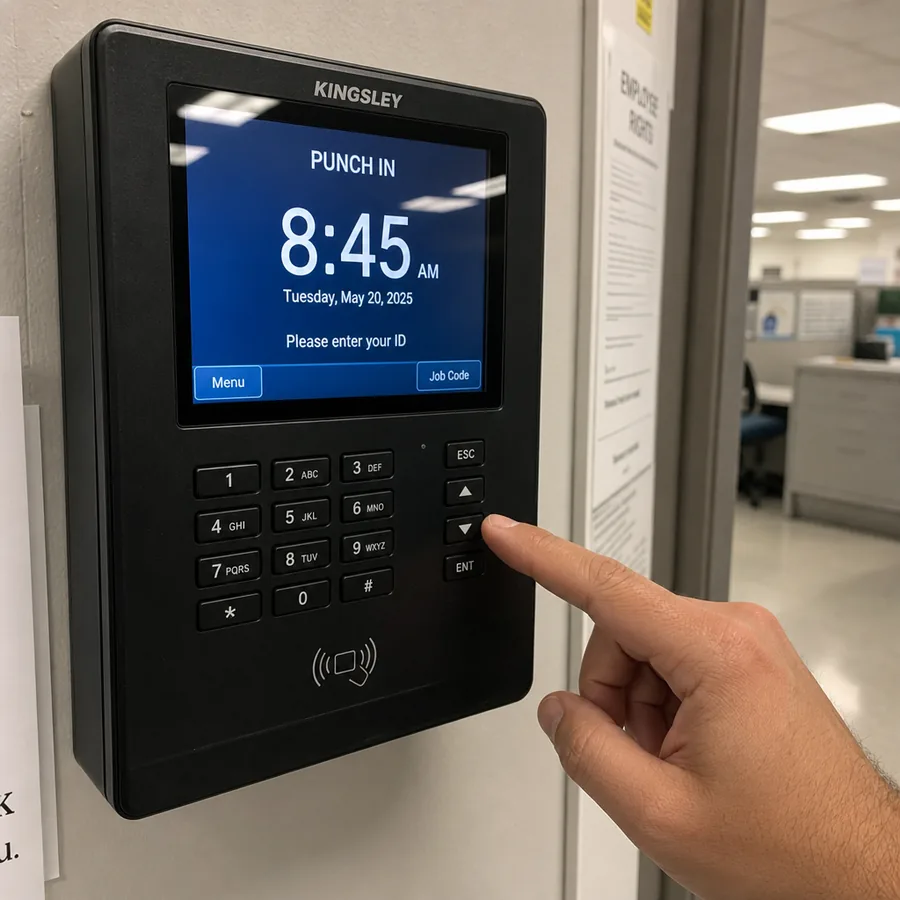
You arrive at 8:00 AM. Your supervisor sends you to lunch at 8:45 AM. You return at 9:15 AM and work until 5:00 PM with one additional 15-minute break.
Your employer's electronic timekeeping system shows:
- Clock-in: 8:00 AM
- Lunch out: 8:45 AM
- Lunch in: 9:15 AM
- Clock-out: 5:00 PM
- Total compensable hours: 8.0
Is this legal?
From a pure FLSA standpoint, maybe. You worked 8 hours. You took a bona fide meal break (assuming you were relieved from duty). Minimum wage and the 40-hour overtime threshold aren't violated on that single day.
But it gets better:
If the practice is part of a pattern to manipulate total weekly hours—say, forcing the early lunch on your longest shift so the recorded time never exceeds 40 hours even though you worked 43—that's where the violation lies.
What courts look for in these cases
Judges want to see:
- Contemporaneous personal records. Text messages sent to a spouse each day noting actual departure time. A pocket notebook with daily start/stop entries. Emails time-stamped when you sent end-of-day reports after 5:00 PM.
- Corroborating witnesses. Co-workers who observed the same practice, or who texted you during the period the employer claims you were at lunch.
- Patterns in the employer's own data. Badge-swipe logs showing building entry/exit times that contradict the timekeeping software. Work product (emails, system logs, customer-service tickets) created during hours the employer says you weren't working.
The employer's official records start with a presumption of accuracy—but only if they were made contemporaneously and in the regular course of business.
Unpaid Overtime: When the Employer "Won't Pay Over 40 Hours"
You work Monday through Thursday, 9 hours each day. Friday you work 6 hours. Total: 42 hours.
Your timesheet shows exactly 40.0 hours. Your paycheck reflects straight time for 40 hours, zero overtime.
Your manager's explanation: "We don't authorize overtime. If you stayed late, that's on you."
Here's the thing:
The FLSA doesn't care whether overtime was "authorized." If the employer knew or should have known you were working, and you performed work that benefited the business, those hours are compensable.
The burden-of-proof framework
In FLSA cases, the employee must prove they performed uncompensated work as a matter of just and reasonable inference.
Once that threshold is met, the burden shifts to the employer to produce records showing the precise amount of work performed—or to disprove the employee's evidence.
If the employer kept inadequate records (or destroyed them), the court accepts the employee's reasonable recollection and awards damages unless the employer proves the employee's estimates are incorrect.
Now, here's where it gets interesting:
Employers sometimes destroy or fail to preserve electronic records—badge swipes, server logs, email metadata—after a complaint is filed. Courts in those situations apply the doctrine from Zubulake v. UBS Warburg LLC, 220 F.R.D. 212 (S.D.N.Y. 2003): when a party had a duty to preserve evidence, destroyed records with a culpable state of mind, and those records were relevant, the court may issue an adverse-inference instruction.
That means the jury is told to presume the destroyed records would have supported the employee's claim.
Required to Stay at Work but Not Paid: The "Waiting Time" Gray Zone
You finish your assigned tasks at 4:30 PM. Your shift officially ends at 5:00 PM. Your supervisor tells you to "stay available" in the break room in case a customer calls.
Is that compensable time?
Under FLSA regulations, time spent "waiting to be engaged" is work time if you're required to remain on the employer's premises and are not free to use the time for your own purposes.
The test: Are you "engaged to wait" (compensable) or "waiting to be engaged" (non-compensable)?
Courts look at whether you can leave the premises, whether interruptions are frequent, and whether you can use the time effectively for personal pursuits.
Proving you were required to stay
Contemporaneous documentation wins these cases:
- Text messages from your supervisor: "Don't leave until I say so."
- Emails sent during the disputed period showing you responded to work requests.
- Your own notes, written each day: "4:30–5:00 PM, held in break room for callback coverage."
Compare that to a spreadsheet the employer's attorney assembles six months later, summarizing "voluntary break time" with no contemporaneous source.
Which one do you think the court credits?
How Employees Prove Unpaid Hours When Records Conflict
You know you worked 44 hours last week. The company's system shows 38.5.
What can you offer as proof?
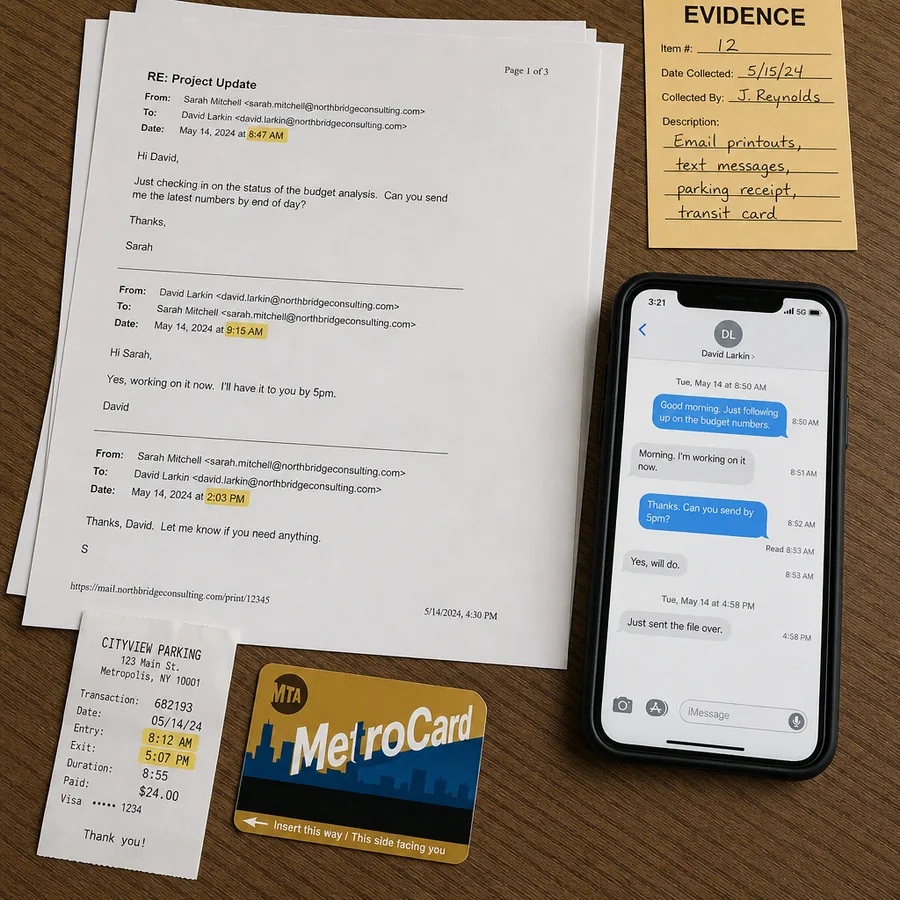
Federal courts accept a range of contemporaneous evidence:
- Personal calendar entries made the same day
- Text messages time-stamped during the disputed hours
- Receipts for meals purchased near the workplace outside recorded shift times
- Parking-garage timestamps or transit-card swipes
- Email send times, document edit logs, or CRM timestamps showing work product created when the employer claims you were off duty
- Witness testimony from colleagues who saw you working
None of these individually is bulletproof. But together, they form a mosaic.
Courts often use the phrase "just and reasonable inference." If your collection of contemporaneous evidence makes it more likely than not that you worked the hours you claim, you've met your burden.
What doesn't work well
Reconstructions prepared after you consult an attorney—"I sat down last night and tried to remember my hours from January"—face the same skepticism courts applied in Palmer v. Hoffman.
They're not made in the regular course of your personal routine. They're created for litigation.
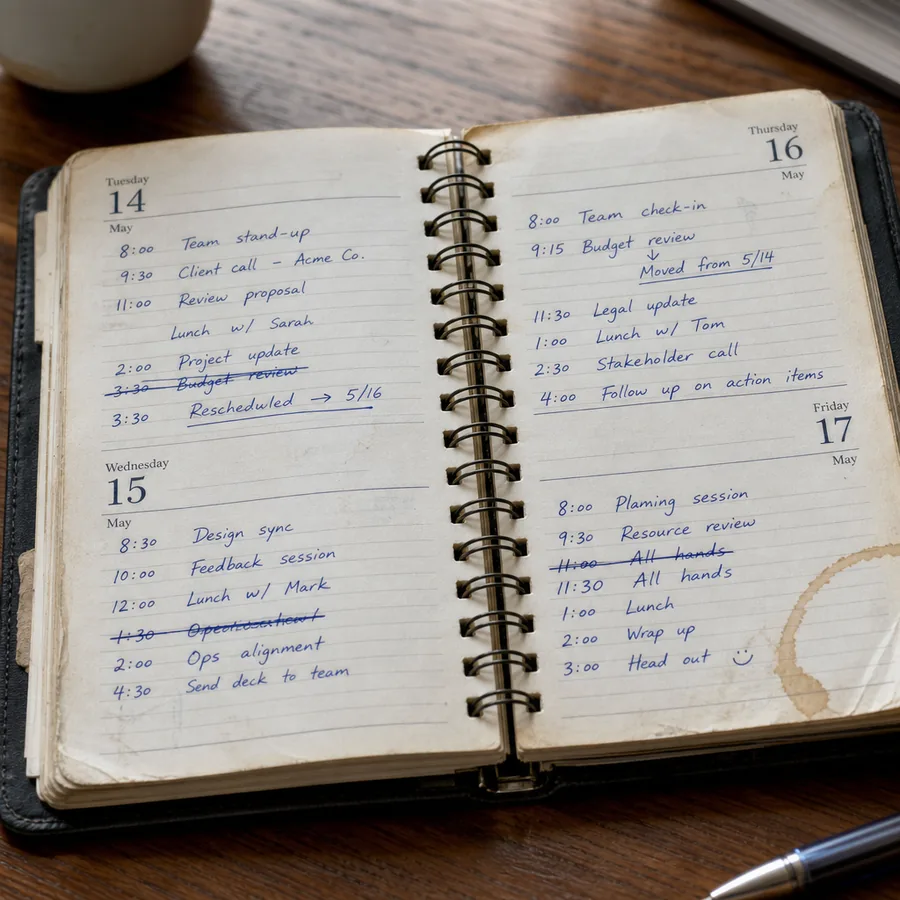
That doesn't mean they're inadmissible. But they carry far less weight than a daily planner you've kept for years, with entries in different-colored ink showing real-time recording.
The Employer's Record-Keeping Duties Under FLSA
The FLSA and its regulations (29 C.F.R. § 516) require employers to preserve payroll records, time cards, and wage-rate tables for at least three years.
When an employer fails to keep or preserve those records, courts shift evidentiary burdens.
If the employer produces no contemporaneous records, and you produce even minimal evidence—text messages, a daily log, testimony from one corroborating witness—the court typically credits your account unless the employer affirmatively disproves it.
But here's where it gets better:
If the employer did have records and destroyed them after you filed a charge with the Department of Labor or notified HR of a wage claim, Zubulake sanctions come into play.
The duty to preserve evidence arises when a party reasonably anticipates litigation. Once you file an EEOC charge, a DOL complaint, or send a demand letter, the employer must suspend routine document-destruction policies for relevant materials.
Failure to do so can result in:
- Adverse-inference jury instructions
- Exclusion of the employer's later-created summaries
- Fee-shifting sanctions
Practical Realities: What This Means for Wage-Hour Disputes
You don't need a law degree to understand the through-line:
Evidence created at the time events happen carries exponentially more weight than evidence assembled later to support a narrative.
If you're experiencing forced early lunch breaks that manipulate total weekly hours, or if your employer's timekeeping system consistently undercounts your hours, the single most valuable step is creating your own contemporaneous record.
Daily entries. Real-time texts or emails. Notes in a planner you already keep for other purposes.
Courts don't require perfection. They require credibility.
A coffee-stained notebook with entries in ballpoint pen, some scratched out and corrected, dated progressively over weeks—that looks like a real-time log.
A pristine Excel file created the weekend before your attorney filed the complaint—that looks like litigation prep.
FAQ: Forced Lunch Breaks, Unpaid Overtime & Record Keeping
Is it illegal for my employer to make me take lunch 45 minutes into my shift?
The FLSA doesn't regulate when meal breaks occur—only whether they're bona fide unpaid breaks (you're completely relieved from duty) and whether total compensable hours meet minimum-wage and overtime requirements. An early lunch isn't inherently illegal, but if it's used to manipulate your weekly hours to avoid paying overtime, that's a violation.
What if my timesheet always shows exactly 40 hours but I know I worked more?
Courts allow employees to prove unpaid hours through contemporaneous personal records—text messages, emails with timestamps, daily planner entries, badge-swipe logs, or witness testimony. If the employer's records are incomplete or were created after a dispute arose, judges give them less weight than real-time documentation.
Can my employer edit my time punches after I submit them?
Employers can make corrections to timekeeping records, but those changes must be documented with an audit trail showing who made the change, when, and why. Systems that allow retroactive edits without transparency—especially when edits appear in bulk after a wage complaint—are viewed skeptically by courts.
What counts as "contemporaneous documentation" that courts will trust?
Records made at or near the time of the event, in the regular course of your routine, by someone with direct knowledge (you). Examples: daily planner entries, real-time text messages, emails sent during the work period, receipts time-stamped near your workplace, or transit logs. Post-dispute reconstructions prepared for litigation carry far less weight.
What happens if my employer destroys records after I file a wage complaint?
Under the duty-to-preserve doctrine from Zubulake v. UBS Warburg LLC, once an employer reasonably anticipates litigation (after a DOL complaint, EEOC charge, or demand letter), it must halt routine destruction of relevant evidence. If records are destroyed with a culpable state of mind, courts can instruct the jury to presume those records would have supported your claim, and may impose additional sanctions.