Written Up for Refusing a Last-Minute Shift? Courts Check the Paper Trail
You've just been handed a write-up—or worse, a termination letter—for refusing to cover a shift.
Maybe you had a pre-approved vacation. Maybe you'd already worked six doubles that month. Maybe the "required" overtime shift appeared on the schedule forty-five minutes before clock-in.
Here's what matters in court: when your employer created the paperwork about that shift assignment.
Federal judges scrutinize the timing and authenticity of employment records under decades-old business-records rules. If the company assembled the "proof" of your refusal days or weeks after the fact—especially after you filed a complaint—courts treat those documents very differently than records made the same day.
In this article, you'll learn:
- How the Supreme Court's Palmer v. Hoffman test determines which employer records judges believe
- What "contemporaneous documentation" actually means in shift-scheduling cases
- Why discipline records created after you complained lose their evidentiary power
The Palmer Rule: Business Records Must Be Made During Business, Not During Lawsuits
In Palmer v. Hoffman, 318 U.S. 109 (1943), the U.S. Supreme Court addressed a deceptively simple question: Can a railroad company use an "accident report" created days after a collision as proof of what happened?
The railroad argued the report was a standard business record—they made one after every accident, so it was "routine."
The Court said no.
The critical distinction: The report was created for the purpose of preparing for litigation, not for running the railroad's day-to-day operations.
Even though the company filled out such reports regularly, the primary purpose was legal defense, not business operations. That meant the report didn't qualify for the business-records exception to hearsay rules.
Now, here's where it gets interesting:
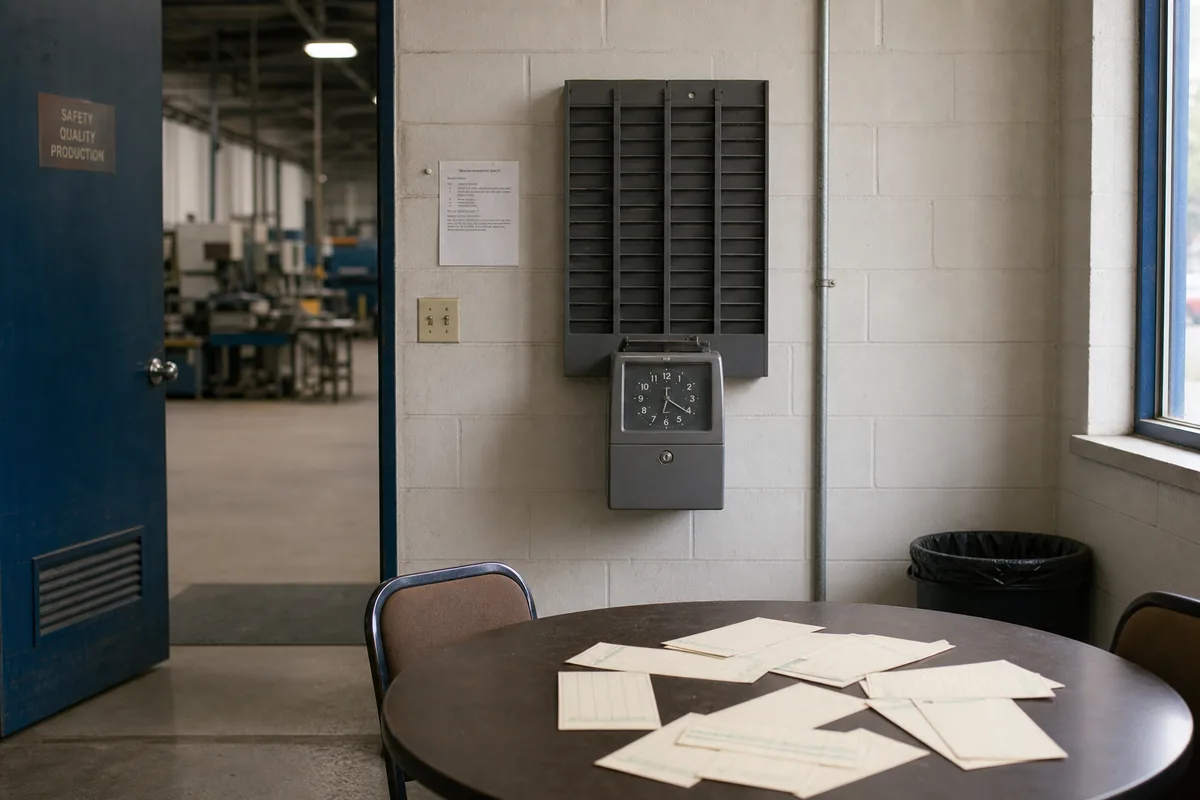
Shift schedules, attendance logs, and overtime assignments are operational records. Employers make them to coordinate labor and meet production needs.
Discipline write-ups, "coaching memos," and investigative summaries made after an employee complains to HR or files an EEOC charge? Those look a lot like the accident report in Palmer.
What Courts Actually Mean by "Contemporaneous" Documentation
Federal Rule of Evidence 803(6)—the business-records exception—requires that a record be "made at or near the time" of the event it describes.
In practice, courts interpret "at or near" strictly in retaliation cases.
Same-day or next-business-day records carry significant weight. A shift-assignment log updated each morning when the supervisor posts the schedule is contemporaneous.
A "shift refusal incident report" typed up three weeks later, two days after the employee filed an OSHA complaint, is not.
Here's the thing:
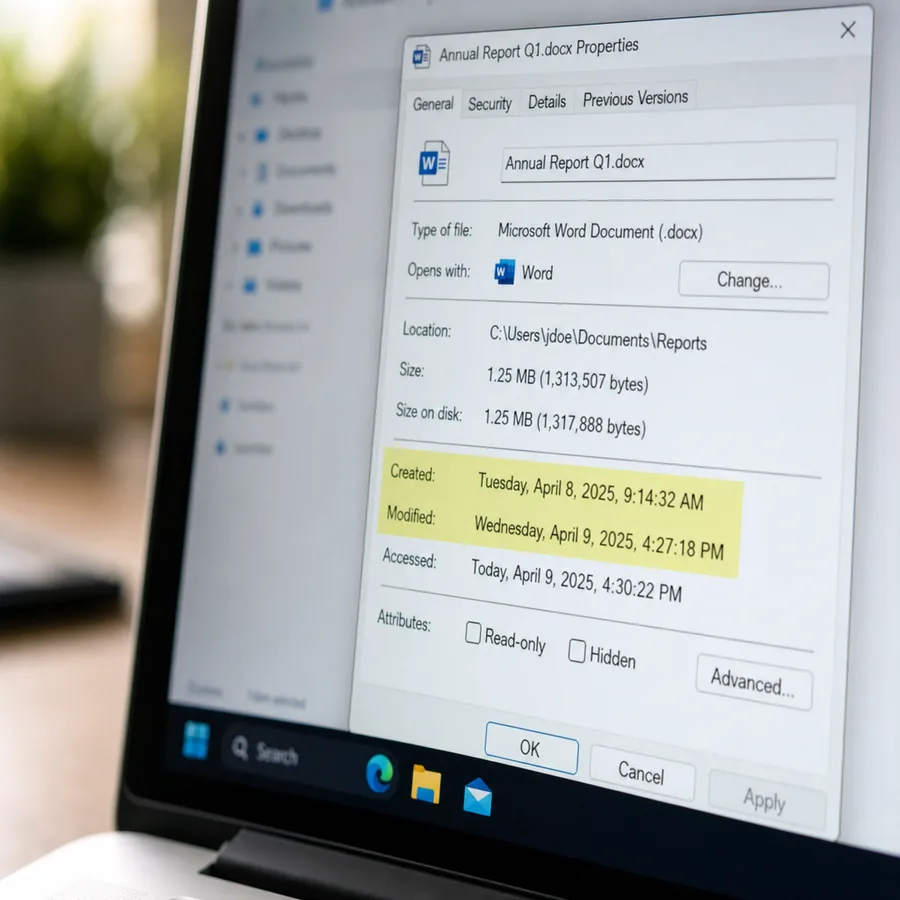
Judges aren't naïve. They know employers can create authentic-looking documents at any time. The timestamp on a Word file, the date line on a memo—those details are easy to manipulate or backdate.
That's why courts look for corroborating operational evidence that the document was actually created when the employer claims:
- Email metadata showing the document was sent to other managers on the stated date
- References to the assignment in payroll or scheduling software logs
- Signatures from witnesses who were physically present at the time
- Integration with other routine records (time-punch data, radio logs, production reports)
When these corroborating details are missing, judges apply Palmer skepticism.
The Litigation-Hold Problem: When Employers Should Have Records but Don't
The flip side of Palmer is the duty to preserve existing records once litigation becomes foreseeable.
In Zubulake v. UBS Warburg LLC, 220 F.R.D. 212 (S.D.N.Y. 2003), the court held that the duty to preserve evidence arises when a party reasonably anticipates litigation.
Once that duty exists, the employer must suspend routine document-destruction policies and issue a "litigation hold" to relevant employees.
Here's what that means in shift-refusal cases:
If you complain to HR about retaliation on Monday, and by Friday the scheduling manager has "accidentally" deleted the prior month's overtime-assignment emails, the court may impose spoliation sanctions.
Spoliation is the destruction of relevant evidence. Sanctions can include:
- An adverse-inference instruction (the judge tells the jury to assume the destroyed records would have favored the employee)
- Preclusion of the employer's testimony about what those records "would have shown"
- Monetary sanctions or, in extreme cases, entry of judgment against the employer
But it gets better:
Under Zubulake, the employer's culpable state of mind matters. Negligent deletion triggers some sanctions. Intentional destruction—especially when the employee had already complained—triggers harsher ones.
Suspicious Timing: When the Absence of Records Speaks Louder Than Their Presence
Sometimes the most damaging evidence is what isn't in the employer's file.
Consider this common fact pattern:
An employee works at the facility for three years. During that time, the scheduling supervisor sends shift assignments via group text the morning of each shift. There are no written "refusal" reports, no progressive-discipline memos, no attendance policy violations on file.
Then the employee reports a safety violation to OSHA.
Four days later, the employee is terminated for "refusing a mandatory overtime shift." The employer produces a two-page "incident summary" dated the day before termination, describing a pattern of "repeated refusals over the past six months."
But there are no text messages, no earlier write-ups, no prior warnings—nothing made at the time of the alleged refusals.
In Loudermilk v. Best Pallet Co., 636 F.3d 312 (7th Cir. 2011), the Seventh Circuit held that suspicious timing alone may justify an inference of retaliation. Same-day termination after a protected complaint is suspicious enough to defeat summary judgment.
Courts reason this way: If the refusals were truly a problem, why didn't the employer document them when they happened?
Legitimate discipline follows a pattern:
- The employer documents the violation at or near the time it occurs
- The employee is given notice and an opportunity to correct
- Subsequent violations are documented with reference to prior warnings
- The progression from warning to termination tracks the employer's written policy
When that pattern is absent—when the "evidence" materializes only after the employee asserts rights—judges smell a rat.
How Employers Try to Backfill the Record—and How Courts Catch Them
Sophisticated employers understand the contemporaneous-documentation problem.
So they try to cure it retroactively. Here are the most common tactics courts have seen:
Tactic 1: The "I always meant to write this up" memo.
A supervisor drafts a memo to the file claiming that they "verbally warned" the employee weeks or months ago but never documented it at the time. The memo is dated after the employee's complaint.
Courts apply Palmer: The memo's primary purpose is litigation defense, not business operations. It doesn't qualify as a business record.
Tactic 2: The "supplemental investigation."
After the employee files an EEOC charge, the employer conducts a new "investigation" and produces witness statements describing events from months earlier.
Again, courts ask: Why wasn't this investigation done at the time? If the employer claims the shift refusal was serious enough to justify termination, why didn't it justify an investigation then?
Tactic 3: The metadata mismatch.
The employer produces a "shift assignment roster" with a printed date of six months ago. But the file's metadata shows it was created last week.
Discovery of electronic files often reveals these discrepancies. When the employer can't explain the mismatch, the court may exclude the document entirely or allow it only as a party-opponent admission—meaning the employee can point to its suspicious creation date as evidence of fabrication.
What "Regular Course of Business" Actually Requires
Federal Rule of Evidence 803(6) requires that a business record be "kept in the course of a regularly conducted activity" and that "making the record was a regular practice of that activity."
In plain English: The employer must show that creating this type of record is something they do routinely, not just when they need to defend a termination.
Here's how courts test this in shift-refusal cases:
The judge will ask: Can the employer produce similar records for other employees during the same time period?
If the answer is no—if this is the only "shift refusal log" the company has ever kept—the record fails the regular-practice test.
If the answer is yes, the next question is: Are those other records also made contemporaneously, or were they also created after-the-fact?
A pattern of post-hoc documentation defeats the regular-practice requirement.
Now, here's where it gets interesting:
Some employers do maintain contemporaneous shift-assignment records—time-clock data, scheduling software logs, payroll exceptions for unapproved absences.
When those records contradict the employer's after-the-fact memos, courts side with the contemporaneous operational data.
Example: The employer claims the employee refused three mandatory overtime shifts in January. But the payroll system shows the employee was paid for all scheduled shifts that month, with no "refused shift" codes entered. The supervisor's March memo alleging January refusals loses credibility.
The Role of Email, Text Messages, and Digital Trails

Modern workplaces generate reams of actually contemporaneous digital records.
Every group-text shift change. Every emailed schedule update. Every Slack message or Microsoft Teams notification about coverage needs.
These records typically include:
- Unimpeachable timestamps (server-side, not user-editable)
- Recipient lists showing who was notified and when
- Reply threads showing employees' real-time responses
- Read receipts or delivery confirmations
When an employer claims an employee refused a shift assignment, but the digital record shows no assignment was sent—or that it was sent with 20 minutes' notice—courts treat the digital record as dispositive.
The Palmer rule strongly favors digital operational records over after-the-fact written summaries precisely because the digital records are harder to fabricate retroactively.
Pre-Approved Vacation Canceled: The Documentation Double-Standard
One of the most common shift-refusal scenarios involves pre-approved time off.
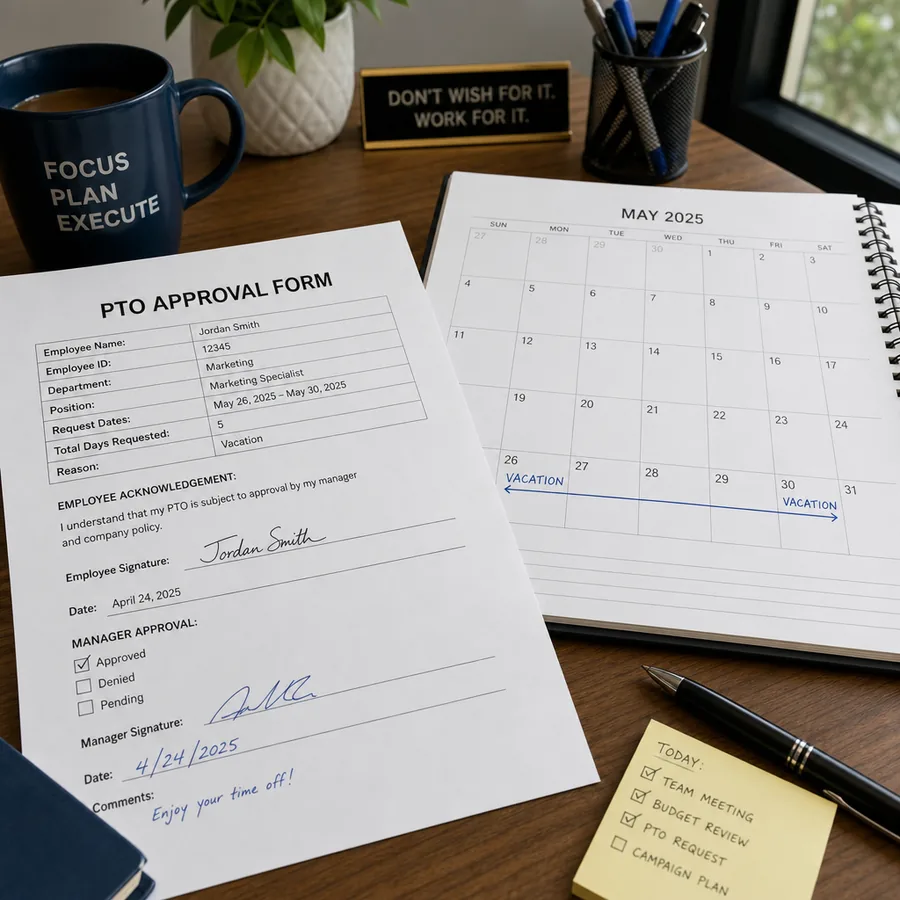
The employee requests vacation in January. The supervisor approves it in writing. In June, two days before the vacation, the supervisor cancels it and demands the employee cover shifts. The employee declines. The employee is disciplined or terminated for "refusing a direct order."
Here's the documentation problem employers face:
The approval of the vacation is usually well-documented—a signed PTO request form, an email confirmation, a calendar entry in the company's leave-tracking system.
The cancellation and the new shift assignment, by contrast, often appear only in the supervisor's post-termination memo to HR.
Courts notice this asymmetry.
If the employer's operational systems reliably document approvals but don't reliably document cancellations or new assignments, the absence of such records for this particular incident is suspicious.
Judges ask: Why is there a clear digital trail for the approval but only the supervisor's word for the cancellation?
Under Palmer, a self-serving memo drafted after the employee complained doesn't carry the same weight as a leave-system record made months earlier.
When Employers Invoke the "It's Our Policy" Defense—and Why Documentation Still Matters
Many employers maintain written policies stating "all overtime is mandatory unless excused in advance" or "employees must provide 48 hours' notice for any schedule change."
The policy exists. The question is whether the employer applied it to this employee for the stated reason—or as a pretext for retaliation.
Courts examine comparative evidence:
- Did the employer enforce the policy consistently against other employees?
- Are there contemporaneous records of prior enforcement actions?
- Did similarly situated employees who violated the policy receive the same discipline?
If the employer can produce shift-refusal write-ups for three other employees over the past year—each documented at the time of the refusal—the policy-enforcement argument is stronger.
If this is the only write-up, created the week after the employee filed an OSHA complaint, the pretext inference is stronger.
The existence of a written policy doesn't cure the absence of contemporaneous enforcement records.
What Happens When There's No Documentation at All?
In some cases, the employer offers testimony about shift assignments and refusals but produces no written records of any kind.
The supervisor takes the stand and says, "I assigned the overtime verbally, and the employee refused."
Without corroborating contemporaneous records, this becomes a pure credibility contest.
Federal judges generally resolve credibility contests at trial, not on summary judgment—meaning the case proceeds to a jury.
But the absence of records can itself support an adverse inference.
Juries are instructed that they may (not must) infer that records the employer should have created but didn't would have been unfavorable to the employer's case.
The reasoning: If the shift assignment was truly mandatory and the refusal truly insubordinate, why didn't the supervisor document it at the time?
Employers who run organized, professional operations document operational issues as they arise. The absence of such records suggests either the incident didn't happen as described or the employer didn't consider it serious until after the employee asserted protected rights.
Frequently Asked Questions
What makes a shift-assignment record "contemporaneous" in court?
Courts generally require that the record be created on the same day or the next business day after the event it describes. A record made weeks or months later—especially after the employee has filed a complaint—will be scrutinized under Palmer v. Hoffman and may be excluded as not made in the regular course of business.
Can my employer create a shift-refusal write-up after I've already filed an EEOC charge?
An employer can create such a document, but courts treat it with significant skepticism. Under the Palmer rule, records made primarily for litigation purposes don't qualify as business records. The document may be admitted only as a statement by a party opponent, which means you can point to its suspicious timing as evidence the employer fabricated a reason for discipline after you complained.
What if my employer says they gave me a "verbal warning" weeks ago but never wrote it down?
Judges are skeptical of uncorroborated verbal-warning claims, especially when the employer's policies or past practice involve written documentation of discipline. If the employer routinely documents warnings for other employees but claims this one was "verbal only," courts may draw an adverse inference. The absence of a contemporaneous record undermines the employer's credibility.
How do courts treat scheduling software or text-message records compared to handwritten memos?
Digital records from operational systems—payroll software, scheduling apps, timestamped emails or texts—are generally given more weight than after-the-fact handwritten or typed summaries. Digital records have independent metadata, are harder to backdate, and are presumed to have been made for business operations rather than litigation. When digital records contradict a supervisor's memo, courts typically credit the digital evidence.
What is a "litigation hold," and when does my employer have a duty to preserve shift records?
A litigation hold is an instruction to preserve potentially relevant evidence. Under Zubulake v. UBS Warburg, the duty arises when litigation is reasonably foreseeable—typically when you file an internal complaint, an EEOC charge, or an OSHA report. Once that duty exists, the employer must stop deleting emails, texts, or scheduling records related to your employment. If they destroy such records after the duty arises, you may be entitled to spoliation sanctions, including an instruction that the jury may assume the destroyed evidence would have favored your case.