Proving Pretext: When Employer Explanations Don't Hold Up
- Shifting explanations. The reason given at the termination meeting differs from the one on the unemployment form, which differs again from the one in the litigation position.
- Factual falsity. The stated reason can be disproved — the deadline you "missed" was met, the customer complaint does not exist.
- Comparators. A similarly situated employee outside your protected class did the same thing and was not fired.
- Deviation from policy. The employer skipped its own progressive-discipline steps, or applied a rule to you that it applies to no one else.
- Suspicious timing plus a thin reason. Days between your complaint and a write-up that cites no specific incident.
You do not need a smoking gun. Reeves v. Sanderson Plumbing Products, 530 U.S. 133 (2000) held that disbelief of the employer's reason, plus your prima facie case, can be enough for a jury — though St. Mary's Honor Center v. Hicks, 509 U.S. 502 (1993) says it permits rather than compels that finding. Check your facts against the elements →
Your employer just gave you a perfectly plausible reason for your termination—performance issues, they say, or a legitimate restructuring.
But you know the real reason: you complained about safety violations, reported harassment, or refused an illegal directive just weeks before.
Here's what you'll learn in this article: how federal courts determine when an employer's stated reason is a lie designed to cover up retaliation or discrimination. We'll walk through the landmark Supreme Court ruling in Reeves v. Sanderson Plumbing Products, Inc., 530 U.S. 133 (2000), and explain exactly what types of evidence courts have treated as proof that the official explanation doesn't hold water.
You'll discover:
- How the burden-shifting framework sets the stage for pretext analysis
- What the Supreme Court said about using pretext evidence alone to win your case
- Real-world examples of evidence that courts have accepted as proof of pretext
The Foundation: McDonnell Douglas Burden-Shifting
Before we dive into pretext, you need to understand the three-step dance that happens in every discrimination and retaliation case.
In McDonnell Douglas Corp. v. Green, 411 U.S. 792 (1973), the Supreme Court created a framework that still governs these cases today.
First, you establish a prima facie case—basic facts showing you were in a protected category (or engaged in protected activity), suffered an adverse action, and circumstances suggest a connection between the two.
Second, your employer must articulate a legitimate, non-discriminatory (or non-retaliatory) reason for the action they took.
Third, you get the opportunity to prove that stated reason is pretext—a lie designed to mask the real, unlawful motive.
For a detailed breakdown of how this burden-shifting framework operates at each stage, see our guide on McDonnell Douglas Burden-Shifting: A Plain-English Walkthrough.
The Hicks Problem: When Disbelief Isn't Enough
Here's where it gets tricky.
In St. Mary's Honor Center v. Hicks, 509 U.S. 502 (1993), the Supreme Court clarified an important limitation: just because a jury doesn't believe your employer's stated reason doesn't automatically mean you win.
The plaintiff in Hicks was a corrections officer who was demoted and then fired. The employer gave shifting explanations that the trial court found unpersuasive.
But the Supreme Court held that rejecting the employer's explanation "permits, but does not compel," a finding of intentional discrimination.
In other words, the jury is allowed to infer discrimination from a false explanation—but they don't have to. They might conclude your employer lied for some other non-discriminatory reason (favoritism toward a friend, bad judgment, incompetence).
The plaintiff lost in Hicks because even though the court didn't believe the employer, it also didn't affirmatively find discriminatory intent.
Now, here's where it gets interesting:
Seven years later, the Supreme Court revisited this question and tilted the playing field back toward employees.
The Reeves Revolution: Pretext Plus Prima Facie Can Be Enough
In Reeves v. Sanderson Plumbing Products, Inc., 530 U.S. 133 (2000), a 57-year-old employee was fired after 40 years with the company.
The employer claimed he was terminated for record-keeping failures. But the evidence showed younger employees who made similar or worse mistakes weren't disciplined at all.
The Supreme Court held that a plaintiff's prima facie case of discrimination, combined with sufficient evidence that the employer's explanation is false, can permit a reasonable jury to conclude the employer unlawfully discriminated.
Justice O'Connor wrote that "the trier of fact can reasonably infer from the falsity of the explanation that the employer is dissembling to cover up a discriminatory purpose."
The Court rejected the employer's argument that additional, independent evidence of discrimination was always required beyond pretext.
What Counts as Evidence of Pretext?
So what exactly does "evidence of pretext" look like in practice?
Courts have recognized several categories of proof that an employer's stated reason is pretextual.
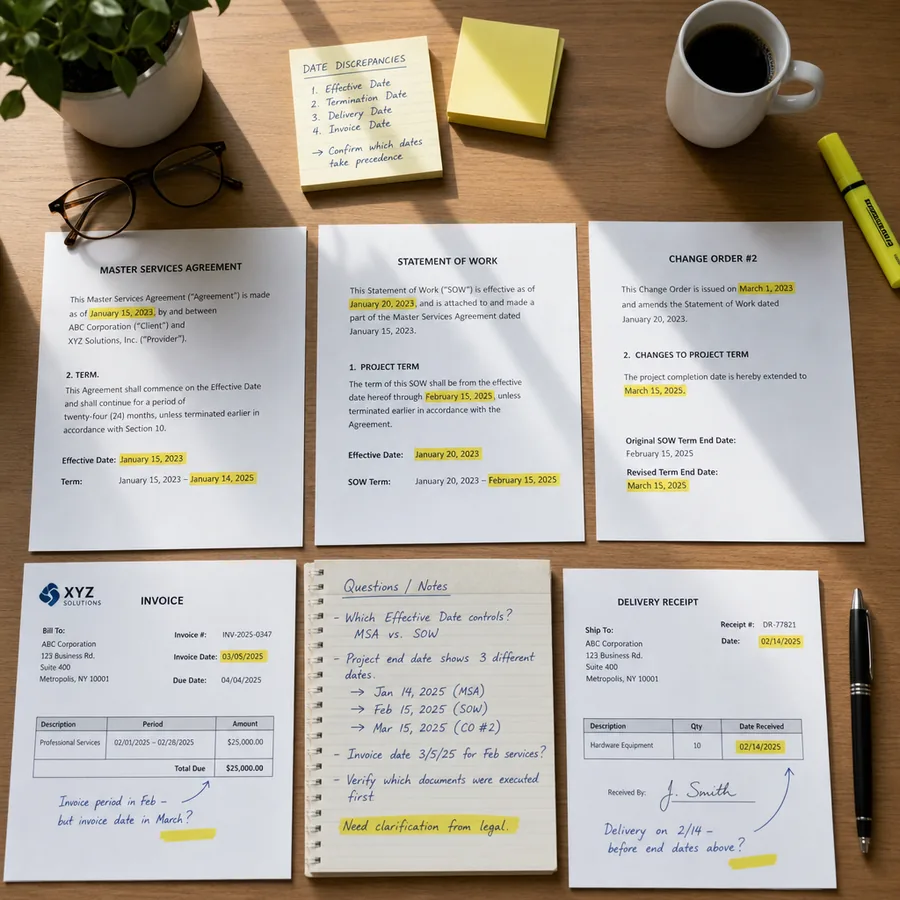
1. Inconsistent or Shifting Explanations
When your employer gives one reason in the termination meeting, a different reason in the unemployment hearing, and yet another reason in their legal defense, courts take notice.
Changing stories suggest the employer is searching for a justification after the fact rather than acting on a genuine, contemporaneous concern.
2. The Reason Never Happened (Factual Falsity)
Sometimes the stated reason is demonstrably, objectively false.
The employer claims you violated a safety policy on March 15—but you have timestamped badge records proving you weren't at work that day. Or they claim you failed to meet a deadline that didn't actually exist.
This is the cleanest form of pretext: the stated reason is a fabrication.
3. Disparate Treatment of Similarly Situated Employees
Your employer says you were fired for tardiness. But three other employees in your department have worse attendance records and received only verbal warnings.
Courts frequently treat selective enforcement as evidence that the stated reason isn't the real reason.
The key is showing the comparator employees are truly "similarly situated"—same supervisor, same job responsibilities, same or worse conduct.
4. The Stated Reason Wasn't Actually Relied Upon
Sometimes the employer's reason is factually true but wasn't actually the basis for the decision.
Example: You're terminated for a customer complaint. But the decision-maker admits in deposition they never reviewed the complaint file before making the termination decision.
Or the written policy requires progressive discipline, but you were fired on a first offense—and the employer can't explain why the policy was bypassed in your case but followed for others.
Here's the thing:
Courts look at whether the employer's stated reason was the actual motivating factor or just a post-hoc rationalization.
5. Temporal Proximity Combined with Weak Justification
When an adverse action follows protected activity by days or weeks, and the employer's stated reason is thin or subjective, courts often permit a pretext inference.
You report a Title VII violation on Monday. You're written up for "poor attitude" on Wednesday. The write-up cites no specific incidents and contradicts your recent positive performance review.
The timing doesn't prove pretext by itself, but combined with a vague or unsupported explanation, it can support the inference that the real reason was retaliation.
How Strong Does Your Pretext Evidence Need to Be?
Remember: Hicks established that you always bear the ultimate burden of proving intentional discrimination or retaliation.
Disproving the employer's reason is necessary but not always sufficient.
After Reeves, the question became: when is pretext evidence sufficient to carry that ultimate burden?
The answer depends on the strength of both your prima facie case and your pretext evidence.
If your prima facie case barely clears the threshold and your pretext evidence shows only minor inconsistencies, a court might find the combination insufficient.
But if your prima facie case is robust (you filed a complaint on Monday and were fired on Wednesday) and your pretext evidence is strong (the stated reason is factually false or directly contradicted by documents), Reeves allows a jury to find unlawful intent without additional proof.
Common Employer Defenses to Pretext Claims
Employers facing pretext allegations typically raise several defenses.
"Honest Belief" Defense
Some employers argue they made a mistake but acted in good faith—they honestly (even if incorrectly) believed the stated reason.
Courts are split on how much weight to give this defense. Some circuits hold that an honestly held belief, even if objectively unreasonable, can defeat pretext. Others require the belief to be reasonable.
"Same Actor" Inference
When the same person who hired you also fired you (especially within a short time frame), employers argue discriminatory or retaliatory intent is unlikely.
Courts treat this as some evidence against pretext, but it's not dispositive—people's motives can change, especially after an employee engages in protected activity.
Business Judgment Rule
Employers often argue courts shouldn't second-guess their business decisions.
That's true—but only to a point. Courts don't sit as super-personnel-departments evaluating whether the employer made the wisest choice.
But they do evaluate whether the stated business reason was the real reason or a cover story.
Procedural Posture: Summary Judgment vs. Trial
The pretext analysis plays out differently depending on when in the litigation you are.
At summary judgment (before trial), the court asks whether a reasonable jury could find pretext based on the evidence presented. You don't have to prove your case—just show there's a genuine dispute of material fact.
Even modest pretext evidence can survive summary judgment if it raises a factual question about the employer's motive.
At trial, the jury must actually decide whether the evidence proves the employer's reason was false and discriminatory or retaliatory intent was the real reason.
The burden of persuasion—proving your case by a preponderance of the evidence—rests with you throughout.
Why Pretext Matters Beyond Discrimination Cases
Although Reeves and Hicks arose in age-discrimination cases, the pretext framework applies across virtually all employment civil-rights statutes.
Title VII retaliation claims. Section 1981 claims. FLSA retaliation. Whistleblower statutes. State employment laws.
Whenever a statute prohibits an action taken "because of" protected activity or status, the McDonnell Douglas burden-shifting framework—and the pretext analysis—applies.
The Reeves principle that prima facie case plus pretext can equal liability has become a cornerstone of federal employment law across multiple statutory schemes.
Think the reason you were given is pretext?
Receipts.law organizes your evidence category by category — the shifting explanations, the comparator facts, the policy steps your employer skipped, the timeline — into attorney-grade case prep.
Start your case → free, no accountFAQ: Proving Pretext in Employment Cases
Does proving my employer's reason is false automatically mean I win my case?
No. St. Mary's Honor Center v. Hicks established that disproving the employer's reason permits but does not compel a finding of discrimination or retaliation. However, Reeves v. Sanderson Plumbing held that your prima facie case combined with sufficient pretext evidence can be enough for a jury to find unlawful intent without additional independent proof.
What's the difference between pretext and mixed-motive cases?
In a pretext case, you argue the employer's stated reason is false and the real reason was unlawful discrimination or retaliation. In a mixed-motive case, you concede the stated reason may be true but argue an unlawful motive was also a motivating factor. The frameworks and burdens of proof differ—pretext analysis follows the McDonnell Douglas model, while mixed-motive cases operate under a different standard established in Price Waterhouse and later modified by statute.
Can I use pretext evidence if my employer had multiple stated reasons for the adverse action?
Yes. If your employer offers multiple justifications, you can attack each one individually. If you can show that all or most of the stated reasons are pretextual, that strengthens the inference that the real reason was unlawful. Courts have found that shifting or cumulative explanations can themselves be evidence of pretext.
How soon after protected activity must the adverse action occur to support a pretext claim based on timing?
There's no bright-line rule, but very close temporal proximity (days or weeks) can support an inference of causation that contributes to your prima facie case. In Clark County School District v. Breeden, the Supreme Court found 20 months too long without other evidence, but lower courts have found periods of 48 hours or less particularly probative. Temporal proximity strengthens your prima facie case, which in turn makes pretext evidence more powerful under the Reeves framework.
What if my employer claims they made an honest mistake about the facts underlying their stated reason?
The "honest belief" defense—that the employer genuinely but mistakenly believed the stated reason—is treated differently across federal circuits. Some courts hold that an honestly held belief, even if unreasonable, defeats pretext. Others require the belief to be objectively reasonable. Documentary evidence showing the employer didn't investigate, ignored contrary evidence, or selectively gathered facts can undermine an honest-belief defense.