Ex-Boss Calling for Passwords After You're Fired? What Courts Say

You clear out your desk on Friday. Monday morning, your phone lights up: "Hey, can you send over the login for the vendor portal? And where did you keep the training certificates?"
It feels weird. You don't work there anymore. But here's what many employees don't realize: those after-hours calls can be evidence of a much bigger problem—one that federal courts take very seriously.
In this article, you'll learn how post-termination scrambles for files and passwords often signal record-retention violations, what federal law actually requires employers to keep, and how missing records can flip the outcome of retaliation cases through a legal tool called an adverse-inference instruction.
You'll discover:
- Why employers have a legal duty to preserve certain records the moment conflict arises
- Which federal regulations set mandatory retention periods—and the civil penalties for violating them
- How courts punish employers who "lose" evidence, including jury instructions that presume the missing files proved wrongdoing
The Duty to Preserve: When the Clock Starts Ticking
Federal courts have long held that employers must preserve relevant evidence the moment they reasonably anticipate litigation.
Not when a lawsuit is filed. Not when a lawyer sends a demand letter. When they anticipate it.
In Zubulake v. UBS Warburg LLC, 220 F.R.D. 212 (S.D.N.Y. 2003), the Southern District of New York spelled out the rule: once a party reasonably anticipates litigation, it must suspend routine destruction policies for relevant documents and issue what's called a "litigation hold."
That means if you file an internal complaint alleging discrimination or safety violations—or even if you send an email to HR about unpaid overtime—your employer's legal department should be hitting the brakes on any auto-delete policies touching your personnel file, timecards, training records, and communications.
Here's the thing:
If your boss is texting you three days after termination asking where you stored the safety-incident reports, that's a red flag. It suggests the company didn't preserve those records when it should have—and may not even know where they are anymore.
Federal Regulations That Mandate Record Retention
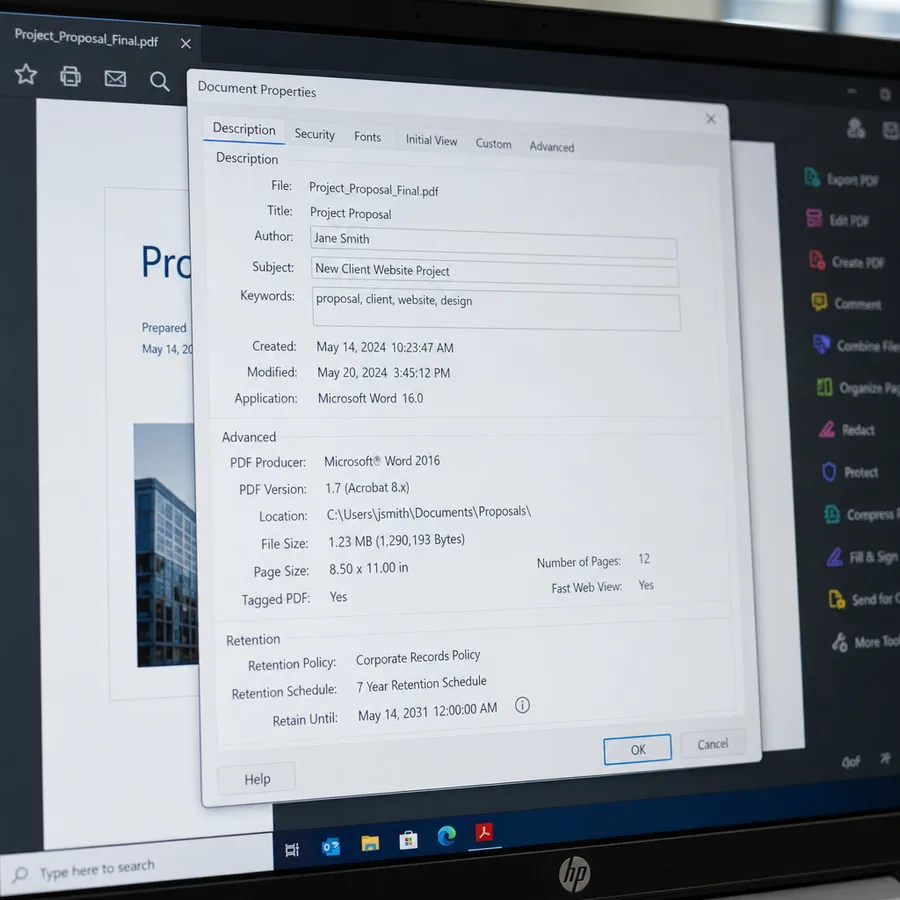
Employers don't just have a common-law duty to preserve evidence in anticipated litigation. They also face explicit statutory retention requirements under multiple federal regulations.
29 CFR §516.2 requires employers to maintain payroll records—including hours worked, wages paid, and deductions—for at least three years under the Fair Labor Standards Act.
29 CFR §1910.1030(g)(2)(vii) mandates that employers keep bloodborne-pathogen training records (including dates, contents, and trainer names) for three years from the date of training.
29 USC §211(c) gives the Secretary of Labor authority to demand access to those records and inspect them. Failure to maintain or produce them can result in civil penalties independent of any retaliation claim.
Now, here's where it gets interesting:
When an employer can't produce records it was required by regulation to keep, that gap becomes evidence in itself.
What Happens When Records Go Missing
Courts use Federal Rule of Evidence 37(e) and inherent-authority sanctions to address spoliation—the destruction or failure to preserve evidence that a party had a duty to keep.
The Zubulake framework requires three elements for sanctions:
- A duty to preserve the evidence existed.
- The records were destroyed with a culpable state of mind (ranging from negligence to intentional destruction).
- The destroyed records were relevant to the claims or defenses in the case.
When all three are met, courts have an arsenal of remedies.
The most powerful? An adverse-inference instruction to the jury.
This tells jurors they may presume that the missing evidence would have been unfavorable to the employer. In a retaliation case where causation is often the disputed element, that presumption can be outcome-determinative.
Other sanctions include:
- Preclusion orders barring the employer from introducing evidence or making arguments tied to the missing records
- Monetary sanctions to compensate the employee for the cost of proving spoliation
- In egregious cases, default judgment or dismissal of the employer's defenses
But it gets better:
You don't need to prove the employer acted in bad faith to win an adverse inference under Rule 37(e). Courts can issue the instruction upon a finding of negligence or even gross negligence in failing to preserve—especially where the missing records were mandated by regulation.
Why Post-Termination Contact Is a Warning Sign
When a former employer contacts you asking for files, passwords, or institutional knowledge after you've been terminated, it often means one of two things:
Scenario A: They never had a centralized record-keeping system, and critical documents lived only on your workstation or in your email.
Scenario B: They had the records once, but they were destroyed under a routine-purge policy that should have been suspended when your internal complaint triggered the duty to preserve.
Either scenario creates evidentiary problems for the employer if you later file a retaliation claim.
Under the Zubulake standard, the employer's inability to produce documents it was legally required to keep—combined with evidence it knew or should have known litigation was likely—can support a finding of culpable spoliation.
And here's the kicker: your post-termination text-message thread asking "Where are the incident logs?" can itself become evidence that the employer failed its preservation duty.
The Intersection of Wage-Hour and Retaliation Claims

Record-retention violations hit hardest when a retaliation claim overlaps with wage-hour issues.
Suppose you were fired two weeks after reporting that your employer wasn't paying proper overtime. Under 29 CFR §516.2, your employer was required to keep accurate records of your hours and pay for three years.
If those records are missing—or if the employer can produce only partial, inconsistent timecards—courts may:
- Impose civil penalties for the retention violation itself under 29 USC §211(c)
- Grant an adverse inference that the missing records would have shown systematic underpayment
- Allow the employee to reconstruct hours worked from memory or personal records, with doubts resolved in the employee's favor
In that scenario, the missing records do double duty: they prove both the underlying wage theft and the employer's consciousness of guilt in the retaliation claim.
Here's where it gets even more interesting:
Federal courts have held that the reasonableness of an employer's proffered reason for termination can be impeached by showing the employer didn't keep records that would verify its story. If the company claims you were fired for poor performance but can't produce the performance reviews it was required to retain, the jury may infer the reviews never existed—or showed the opposite.
What the Law Does Not Require You to Do
Federal employment law imposes record-keeping duties on employers, not former employees.
You have no legal obligation to:
- Retain work files, emails, or documents after your employment ends (unless you signed a specific agreement to the contrary)
- Provide training or transition assistance to your replacement
- Answer calls, texts, or emails from former supervisors seeking institutional knowledge
- Surrender personal devices or accounts unless they contain company property explicitly defined in an employment agreement
The employer's failure to plan for turnover is not your emergency.
That said, the choice of whether to respond is a tactical one that depends on the specific facts, your state's law, and whether you've already consulted an attorney about potential claims.
How Missing Records Shape Jury Verdicts

Retaliation cases often come down to motive. Did the employer fire you because you complained, or for a legitimate, unrelated reason?
When the employer can't produce the records that would prove its explanation—performance reviews, disciplinary write-ups, attendance logs—the jury is left to choose between your testimony and the employer's unsupported assertions.
An adverse-inference instruction tips that balance heavily in your favor.
It tells jurors: "You may infer that the records the employer failed to keep would have contradicted its story."
In practice, that inference often decides causation. If the employer claims you were fired for absenteeism but can't produce the time-and-attendance records it was required to maintain, the jury can presume those records would have shown perfect attendance—making the retaliation motive the only explanation left standing.
Courts are especially willing to draw adverse inferences where:
- The missing records are precisely the type federal regulations require employers to keep
- The employer had notice of the duty to preserve (via an internal complaint, EEOC charge, or other triggering event)
- The employer offers shifting or vague explanations for why the records are unavailable
Frequently Asked Questions
Does my former employer have the right to demand I return company files after termination?
Federal law does not create a general obligation for former employees to return files unless those files constitute trade secrets or proprietary information explicitly covered by a signed agreement. However, the employer's demand itself—especially if it comes weeks after termination—may be evidence that the company failed to maintain its own records as required by regulation.
Can I be sued for refusing to help train my replacement after I've been fired?
Absent a specific contractual provision requiring post-termination transition assistance, no federal employment law imposes such a duty. The employer bears the responsibility for institutional continuity and record retention, not departing employees.
What is an adverse-inference instruction and why does it matter?
An adverse-inference instruction is a direction from the judge to the jury that they may presume missing or destroyed evidence would have been unfavorable to the party that failed to preserve it. In retaliation cases, this presumption can satisfy the employee's burden of proving the employer's stated reason for termination was pretextual, often making it the difference between winning and losing at trial.
How long are employers required to keep payroll and training records under federal law?
Under 29 CFR §516.2, employers must retain payroll records for at least three years. Under 29 CFR §1910.1030(g)(2)(vii), bloodborne-pathogen training records must be kept for three years from the date of training. Other OSHA training and exposure records may have longer retention periods depending on the hazard.
If my employer contacts me after termination asking for passwords or files, should I respond?
That decision depends on facts specific to your situation, including whether you have potential legal claims, what your employment agreement said, and your state's law. The request itself may be evidence of a record-retention failure, which is one reason you should preserve the communication and consult an attorney before deciding how to respond.