Demoted Days After Filing an OSHA Complaint? The Timing Rule

You reported a safety hazard at work on Monday. By Friday, your manager reassigned you to a less desirable shift, cut your hours, or wrote you up for the first time in years.
The timing feels obvious. But does it count as legal evidence?
Yes—and courts treat it as some of the strongest proof of retaliation you can have.
In this article, you'll learn how the temporal-proximity doctrine turns suspicious timing into a prima facie retaliation case, why "very close" proximity shifts the burden to your employer, and what intervals courts have actually accepted as proof of cause-and-effect.
Here's what we'll cover:
- Why close timing alone can prove retaliation
- What "very close" means in OSHA and safety-complaint cases
- How temporal proximity works across different federal statutes
What Temporal Proximity Means in Retaliation Law
Temporal proximity is a legal term for the gap in time between a protected activity—like filing an OSHA complaint or reporting unsafe conditions—and an adverse action like demotion, discipline, or termination.
When that gap is short enough, courts treat it as circumstantial evidence that the adverse action happened because of the protected activity.
The U.S. Supreme Court made this clear in Clark County School District v. Breeden, 532 U.S. 268 (2001). The Court held that proximity must be "very close" to satisfy the causation element of a prima facie retaliation case. In that decision, the Court noted that 20 months between protected activity and adverse action "suggests, by itself, no causality at all."
But the opinion also acknowledged that intervals measured in days uniformly support an inference of retaliation.
Why Timing Matters So Much in OSHA Whistleblower Cases

OSHA's anti-retaliation provision—Section 11(c) of the Occupational Safety and Health Act—forbids employers from punishing workers who report unsafe conditions, request inspections, or participate in enforcement proceedings.
To prove retaliation under Section 11(c), you must show that:
- You engaged in protected activity (e.g., filing a safety complaint),
- Your employer knew about it,
- You suffered an adverse action, and
- The protected activity caused the adverse action.
That fourth element—causation—is where temporal proximity does its work.
When your demotion, write-up, or termination happens within days of your OSHA complaint, courts treat the timing itself as proof that the complaint motivated the employer's decision.
Here's the thing:
Once you establish temporal proximity, the burden shifts to your employer. They must articulate a legitimate, non-retaliatory reason for the adverse action—and you then get the chance to prove that reason is pretextual.
What "Very Close" Actually Means: Real Court Thresholds
Courts rarely set bright-line rules for how many days qualify as "very close." But patterns emerge from case law.
Days to weeks: Federal circuit courts have consistently found temporal proximity sufficient when adverse actions occur within 48 hours, one week, or two weeks of the protected activity.
One to three months: Some courts accept intervals in this range when combined with other circumstantial evidence—like a sudden change in the employer's documented reasons, an unusual departure from past practice, or a shift in tone after the complaint.
Beyond six months: As the gap widens beyond 90–120 days, courts generally require additional evidence of retaliatory animus. Timing alone won't carry causation once you approach the six-month mark.
The Breeden decision made clear that 20 months is far too long. But it also pointed to the opposite end of the spectrum: cases where adverse actions follow within days are treated as textbook examples of suspicious timing.
How Temporal Proximity Applies Across Federal Statutes
The temporal-proximity doctrine isn't unique to OSHA retaliation cases. It appears across the entire landscape of federal employment law.
Title VII (race, sex, religion, national-origin discrimination): The Supreme Court's decision in Burlington Northern & Santa Fe Railway Co. v. White, 548 U.S. 53 (2006), set the standard for what counts as a "materially adverse" action in retaliation cases. The Court held that an action is materially adverse if it "might well have dissuaded a reasonable worker from making or supporting a charge of discrimination." Close temporal proximity helps prove that the challenged action was retaliatory rather than coincidental.
National Labor Relations Act (NLRA): When workers engage in protected concerted activity—like organizing or discussing wages—and face discipline within days, the National Labor Relations Board applies the same temporal-proximity analysis to infer anti-union animus.
Fair Labor Standards Act (FLSA): Section 215(a)(3) prohibits retaliation against employees who complain about wage-and-hour violations. Courts look to temporal proximity to determine whether a termination or demotion was motivated by the complaint.
State whistleblower statutes: Most state laws protecting workers who report legal violations, safety hazards, or fraud mirror the federal framework and rely on the same timing-based inference.
Now, here's where it gets interesting:
Temporal proximity doesn't just help at the prima facie stage. It also undermines an employer's defense. If the company claims your performance suddenly became unacceptable or that a restructuring happened to coincide with your complaint, the tight timing makes those explanations harder to believe.
When Timing Alone Isn't Enough
Close proximity creates an inference of causation, but it's rebuttable.
Your employer can defeat your prima facie case by offering a legitimate, non-retaliatory explanation for the adverse action—and if they do, you must then show that explanation is pretextual (a cover story).
Common employer defenses include:
- Pre-existing performance issues: "We were already documenting problems before the complaint."
- Independent business reasons: "The restructuring was planned months ago."
- Other employees also affected: "We reassigned the whole team, not just the complainant."
If your employer produces documentation showing that the adverse decision was in motion before your protected activity, temporal proximity loses much of its force.
But even then, inconsistencies or timing anomalies in the employer's narrative can revive your case. For example, if the performance-improvement plan was drafted the day after your OSHA complaint, or if similar past issues never triggered discipline, the proximity still suggests retaliation.
How Courts Weigh Temporal Proximity Alongside Other Evidence
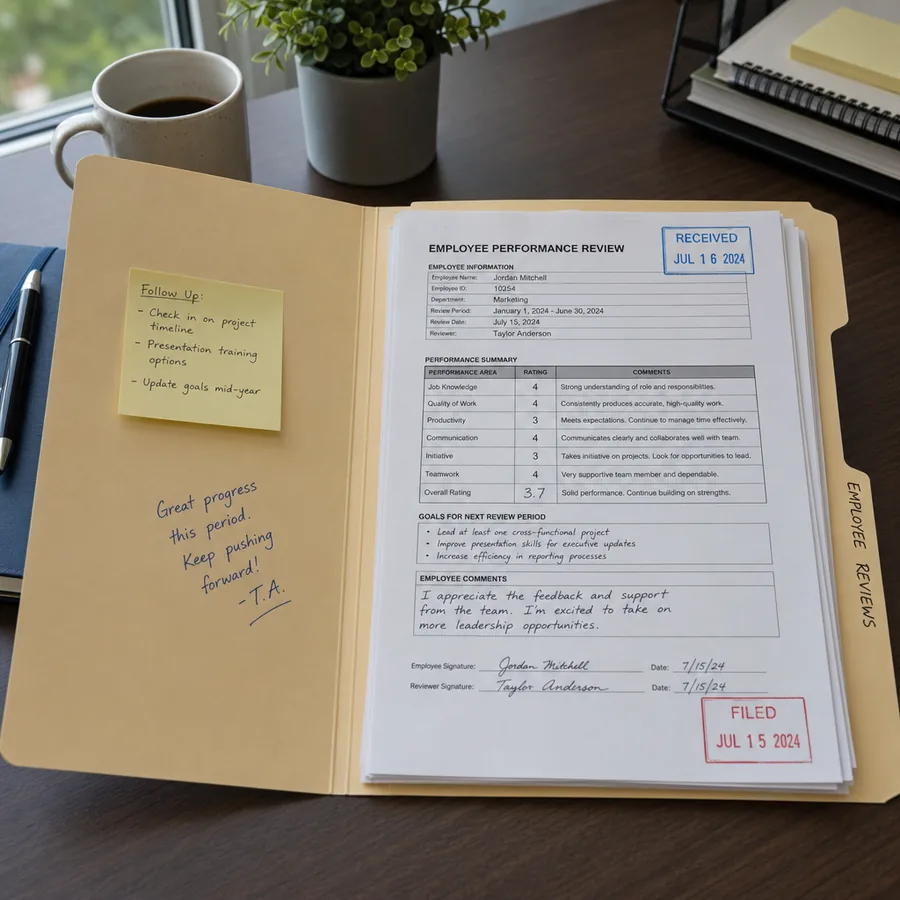
Temporal proximity is powerful, but it's even stronger when combined with other circumstantial evidence of retaliatory motive.
Departure from standard practice: Did your employer skip the usual progressive-discipline steps? Did they apply a policy inconsistently?
Shift in tone or treatment: Did your supervisor's performance reviews go from "excellent" to "needs improvement" immediately after your complaint?
Comparative evidence: Were other employees who committed similar infractions treated more leniently?
Direct comments: Did anyone in management reference your complaint, call you a "troublemaker," or suggest you should have kept quiet?
When courts see close timing plus any of these factors, they're far less likely to grant summary judgment in favor of the employer. Instead, they let the case proceed to trial, where a jury evaluates credibility and motive.
Here's the bottom line:
Temporal proximity turns the calendar into evidence. The closer the adverse action follows your OSHA complaint or safety report, the harder it is for an employer to claim the two events are unrelated.
What Happens After You Establish Temporal Proximity
Once you show that an adverse action followed your protected activity by a matter of days, you've met the prima facie burden for causation in most retaliation frameworks.
The case doesn't end there. The burden shifts to your employer to articulate a legitimate, non-retaliatory reason for the action.
If they do, the burden shifts back to you to show that the stated reason is pretextual—meaning it's a lie or a cover-up.
Evidence of pretext can include:
- Inconsistencies in the employer's explanation (the reason changed over time)
- Lack of documentation (no prior warnings, no contemporaneous notes)
- Disparate treatment (similar employees weren't disciplined)
- Proximity itself (the timing is just too suspicious)
At this stage, temporal proximity continues to matter. Even if the employer offers a facially legitimate reason, a jury may conclude that the real reason was retaliation—especially when the adverse action came so quickly after the complaint that there was no time for a genuine performance review or investigation.
Why Employers Struggle to Explain Away Close Timing

Timing cuts both ways. It helps you prove causation—and it undermines the credibility of your employer's defense.
Consider this scenario:
You file an OSHA complaint on a Monday about blocked emergency exits. On Thursday, your supervisor issues you a written warning for "failure to follow safety protocols."
Your employer claims the warning was based on an incident from two weeks earlier. But if that's true, why did they wait until three days after your complaint to document it?
Courts notice these gaps. Temporal proximity doesn't just prove that the complaint and the warning happened close together—it highlights the implausibility of the employer's explanation.
That's why close timing is so valuable in retaliation cases. It creates a narrative problem for the employer that's difficult to explain away.
Frequently Asked Questions
Does temporal proximity apply to informal complaints about safety, or only formal OSHA filings?
Temporal proximity applies to any protected activity under the relevant statute—whether it's a formal OSHA complaint, an internal safety report to a supervisor, a verbal objection to unsafe conditions, or participation in an inspection. Courts look at the timing between the protected activity and the adverse action, not the formality of the complaint.
How close does "very close" have to be to satisfy temporal proximity?
Courts have accepted intervals as short as 48 hours and as long as a few weeks. The Breeden decision said 20 months is too long, but cases involving days or a couple of weeks are routinely treated as sufficient. Beyond 90 days, you'll generally need additional evidence of retaliatory motive.
Can my employer defeat temporal proximity by claiming they didn't know about my complaint?
Knowledge is a separate element of a prima facie retaliation case. If your employer genuinely didn't know you filed an OSHA complaint or raised a safety concern, temporal proximity can't prove causation—because there's no causal link if they weren't aware of the protected activity. However, courts often infer knowledge from circumstantial evidence, especially in small workplaces or when the complaint was made to a direct supervisor.
Does temporal proximity alone guarantee I'll win my retaliation case?
No. Temporal proximity establishes a prima facie case and shifts the burden to your employer, but the employer can still prevail by offering a legitimate, non-retaliatory reason for the adverse action. If they do, you must then prove that reason is pretextual. Close timing is powerful evidence, but it's not an automatic win.
What if the adverse action happened a few months after my OSHA complaint—is my case hopeless?
Not necessarily. While very close proximity (days to weeks) is the strongest form of temporal evidence, courts sometimes accept longer intervals when combined with other evidence—such as a shift in the employer's stated reasons, direct comments suggesting retaliation, or a pattern of escalating hostility after the complaint. Timing becomes less decisive as the gap widens, but it doesn't eliminate your claim.