Mass Layoff Hit Mostly Minority Workers? What Courts Look For

You walk into the conference room. Twenty people get the news. Nineteen are Black or Latino. One is white.
That's not a coincidence—and federal courts know it.
When a company lays off mostly minority workers, you're not just dealing with an unfair business decision. You're looking at a pattern courts examine under 42 U.S.C. §1981, a Civil War-era statute that gives you weapons Title VII doesn't: no damages cap, no EEOC waiting period, and a jury trial as a matter of right.
This guide walks you through what courts actually look for when layoffs disproportionately hit one race. You'll learn:
- The statistical patterns judges examine in mass-firing cases
- How §1981 differs from Title VII—and why that gap matters for your damages
- What evidence transforms a suspicious layoff into a provable discrimination claim
Why Section 1981 Changes the Math on Race-Based Layoffs
Title VII caps compensatory and punitive damages at $300,000 for employers with 500+ workers.
Section 1981 has no cap.
That difference turns a $300,000 ceiling into a multi-million-dollar jury question when the facts support it. Congress enacted §1981 in 1866 to guarantee formerly enslaved people the same contract rights as white citizens. For 123 years, courts read it narrowly—until Patterson v. McLean Credit Union, 491 U.S. 164 (1989) held that it covered only contract formation, not what happened after you were hired.
Congress overruled Patterson two years later. The Civil Rights Act of 1991 amended §1981 to cover "the making, performance, modification, and termination of contracts, and the enjoyment of all benefits, privileges, terms, and conditions."
Termination means layoffs. And layoffs are now squarely within §1981's scope.
The But-For Standard: What Comcast Demands You Prove
Here's the thing: §1981's unlimited damages come with a higher burden of proof.
In Comcast Corp. v. Nat'l Ass'n of African American-Owned Media, 589 U.S. 327 (2020), the Supreme Court held that race must be a but-for cause of your termination. "But for your race, would you still have been fired?" If the answer is yes—if the company would have laid you off anyway for legitimate reasons—§1981 doesn't apply.
That's stricter than Title VII's mixed-motive framework, which allows recovery if race was merely a motivating factor (even if other factors also mattered).
But Comcast also clarified something critical: the but-for standard doesn't change at trial. A plaintiff carries the same burden from the complaint through the jury charge. You don't need direct evidence of racism at the pleading stage; you need enough facts to plausibly suggest that race was the reason for the layoff.
Statistical Patterns Courts Examine in Disproportionate Layoffs

Numbers alone rarely prove intent. But numbers plus context can.
When a reduction in force (RIF) hits one racial group harder than others, courts look at:
Baseline Workforce Composition vs. Layoff Composition
If your company's workforce is 40% Black but 85% of the people fired are Black, that disparity triggers scrutiny. Courts compare the demographic makeup of the affected group to the overall pool of similarly situated workers.
The comparison must be apples-to-apples. If the layoff targeted the shipping department, the relevant pool is shipping workers, not the entire company.
Selection Criteria and Who Applied Them
Did the company use objective metrics—sales numbers, attendance records, performance scores—or did managers exercise subjective discretion?
Subjective systems are fertile ground for discrimination. When a supervisor hand-picks who stays and who goes, courts ask whether the supervisor harbored racial animus and whether that animus influenced the picks.
Timing and Statements by Decision-Makers
Did the layoff follow complaints about racial harassment? Did a manager make remarks about "cultural fit" or "attitude problems" that correlate with race?
Temporal proximity—layoffs shortly after a discrimination complaint—raises an inference of retaliation. Race-coded language raises an inference of animus.
How the McDonnell Douglas Framework Structures These Cases
Most §1981 layoff claims proceed under the burden-shifting framework established in McDonnell Douglas Corp. v. Green, 411 U.S. 792 (1973).
Step one: You establish a prima facie case. That means showing (1) you belong to a protected class, (2) you were qualified and performing satisfactorily, (3) you were terminated, and (4) similarly situated workers outside your race were treated more favorably.
Step two: The employer must articulate a legitimate, non-discriminatory reason for the layoff. "We eliminated your position to cut costs." "Your performance scores were in the bottom quartile." "We restructured and your role became redundant."
Step three: You prove pretext. This is where the case is won or lost.
What Pretext Looks Like in Mass-Layoff Cases
Pretext means the employer's stated reason is a lie—a cover story for race discrimination.
Courts look for inconsistencies, shifting explanations, and departures from normal procedure. If the company claims layoffs were purely performance-based but the fired employees had stronger reviews than retained employees, that's evidence of pretext.
If the employer says the decision was driven by seniority but then kept junior white workers while firing senior Black workers, that's pretext.
In Reeves v. Sanderson Plumbing Prods., Inc., 530 U.S. 133 (2000), the Supreme Court held that a jury can infer discrimination from the combination of a prima facie case and sufficient evidence that the employer's explanation is false. You don't need a smoking-gun email that says "fire the Black workers." Disbelief of the employer's story, plus the background circumstances, can be enough.
Why Pattern Evidence Matters More in Mass Terminations
A single termination is hard to contextualize. Was it discrimination or a personality clash? Bad luck or bad management?
A mass layoff gives you a dataset.
When ten, twenty, or fifty workers lose their jobs at once, statistical patterns emerge. If 70% of the people fired share the same race and only 30% of the workforce belongs to that race, that disparity invites the question: why?
Employers will say the answer is neutral. Budget cuts. Departmental restructuring. Performance distributions. Your job is to show that the neutral explanation doesn't hold up under scrutiny.
Aggregate vs. Individual Evidence
Pattern evidence—demographics, comparative statistics, company-wide practices—establishes context. But §1981 also requires individual proof that race was the but-for cause of your termination.
Courts allow you to combine both. The pattern shows motive and opportunity; the individual facts show application. Together, they create a narrative: "This company systematically disfavored Black workers, and I was one of them."
Now, here's where it gets interesting:
Even if you can't prove company-wide intent, you can still win if you prove that your particular decision-maker acted with racial animus. Section 1981 doesn't require enterprise-level conspiracy. It requires that race was the reason you, specifically, lost your job.
The Procedural Advantages That Make Section 1981 Attractive
Unlike Title VII, §1981 doesn't force you through the EEOC's administrative process. You can file directly in federal court.
That saves months—sometimes years. The EEOC's median processing time for a charge hovers around ten months, and that's before you receive a right-to-sue letter. With §1981, you skip that queue entirely.
Four-Year Statute of Limitations
Title VII gives you 180 days (or 300 in deferral states) to file an EEOC charge. Section 1981 gives you four years to file suit.
If you didn't realize the layoff was discriminatory until months later—after you compared notes with coworkers, after you saw the replacement hire, after a pattern became visible—you still have time to act under §1981.
Jury Trial and Uncapped Damages
Section 1981 guarantees a jury trial. That matters because juries, more than judges, respond to stories of systematic unfairness.
And because there's no damages cap, the jury can award whatever the evidence supports: lost wages, emotional distress, punitive damages for egregious conduct. In cases involving long careers, senior-level salaries, or particularly cruel circumstances, verdicts can reach seven figures.
What You Need to Document When a Disproportionate Layoff Happens
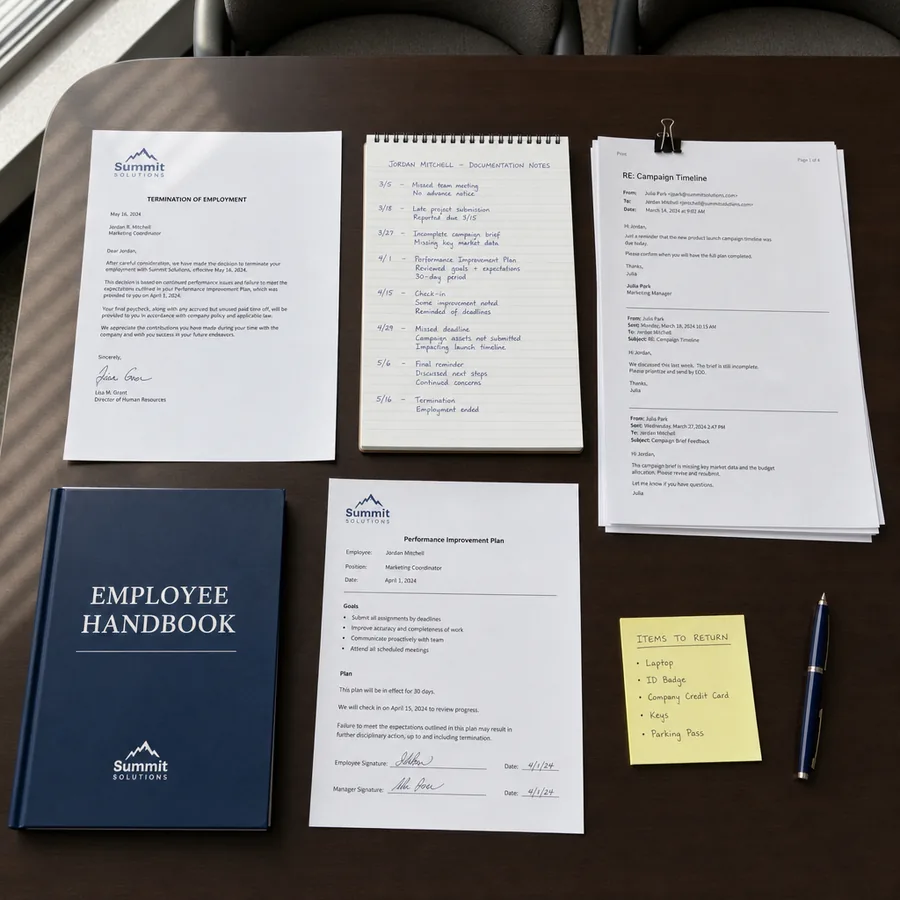
The evidence you preserve in the first weeks after a layoff can determine whether you have a viable claim two years later.
Courts don't expect you to have smoking-gun proof on day one. But they do expect you to gather the observable facts.
Names and Demographics of Terminated Workers
Who was laid off? Compare that list to who was retained. If you don't have official access to HR records, talk to coworkers. Compile what you can observe.
Stated Reasons for the Layoff
What did management say in the termination meeting? What was written in the severance letter or separation agreement? Did the explanation change over time?
Capture the contemporaneous account. Memories fade; documents don't.
Comparators: Similarly Situated Workers Who Kept Their Jobs
Who had the same job title, same department, similar tenure, and similar performance—but wasn't fired? If those workers are disproportionately white (or another race), that's your comparator evidence.
Write down names, roles, and any performance data you can access. If the company later claims you were the worst performer in your group, you'll need to show that others with worse metrics survived.
Remarks, Emails, and Patterns of Treatment
Did a supervisor make comments about race, "culture," or "fit"? Did you observe different standards applied to white vs. minority workers?
Print emails. Save Slack messages. Note dates and witnesses. These fragments, aggregated, can reveal intent.
Common Defenses Employers Raise—and How Courts Evaluate Them

Employers facing pattern-based discrimination claims deploy predictable defenses. Knowing them helps you anticipate the counterarguments.
"We Used Objective Criteria"
The employer points to a matrix: performance scores, attendance records, sales targets. "We just followed the numbers," they say.
But courts ask follow-up questions. Were the criteria applied uniformly? Who assigned the performance scores, and were those subjective? Did the matrix appear only after the discrimination complaint was filed?
If the "objective" system contains subjective components—manager ratings, "leadership potential" assessments—it's vulnerable to bias.
"Business Necessity Drove the Decision"
Budget cuts are real. Restructuring happens. Courts don't second-guess legitimate business judgments.
But business necessity doesn't immunize discriminatory execution. Even if the company genuinely needed to reduce headcount, the question remains: why were minority workers disproportionately selected?
If the stated criteria don't explain the racial skew, business necessity isn't a complete defense.
"The Statistics Are Coincidental"
Employers argue that small sample sizes make racial disparities unreliable. "We only laid off twenty people; randomness could produce that result."
Courts evaluate statistical significance. Expert testimony on probability and disparity analysis can rebut the coincidence theory. If the odds of the observed racial distribution occurring by chance are 1 in 100, a jury is entitled to infer intent.
What Happens When Both Discriminatory and Legitimate Reasons Exist?
Here's where Comcast's but-for standard becomes critical.
Imagine your performance was genuinely mixed—some good quarters, some weak ones—and the company also harbored racial bias. Would you have been fired anyway, even if decision-makers were race-blind?
If the answer is no—if your flaws were tolerated in white employees but became disqualifying for you—then race was a but-for cause. You wouldn't have been fired but for your race.
If the answer is yes—if your performance truly justified termination under neutral standards consistently applied—§1981 won't provide relief, even if some bias existed.
The line is often blurry, which is why these cases go to juries. Jurors assess credibility, weigh the employer's story against your account, and decide what really motivated the decision.
Combining Claims: Section 1981 Alongside Other Statutes
You're not limited to a single legal theory. Many plaintiffs assert §1981 claims together with:
Title VII Claims
Title VII allows mixed-motive liability (race as a motivating factor, even if not the only one) and provides administrative remedies through the EEOC. Pairing it with §1981 gives you strategic options: pursue Title VII's easier standard at the liability phase, then invoke §1981's uncapped damages if you prevail.
State Anti-Discrimination Laws
Many states have their own civil-rights statutes with different procedural rules, remedies, or protected classes. State claims can provide additional damages theories or fallback positions if federal claims falter on procedural grounds.
Retaliation Claims
If you complained about racial harassment or discrimination before the layoff, you may also have a retaliation claim under Title VII or §1981. Temporal proximity—termination shortly after a complaint—supports an inference of retaliatory motive.
Courts allow these theories to proceed in parallel. You don't have to choose one; you can present the jury with multiple routes to liability.
Frequently Asked Questions
Can I bring a §1981 claim if I'm not Black?
Yes. Section 1981 prohibits racial discrimination against any person. Courts have applied it to claims by white, Latino, Asian, and Middle Eastern plaintiffs. The statute protects all races equally, though its historical origin was to remedy discrimination against African Americans.
Does the lack of a damages cap apply to emotional distress and punitive damages?
Yes. Section 1981 has no statutory cap on compensatory damages (including emotional distress) or punitive damages. The jury can award whatever the evidence supports, subject only to constitutional due-process limits on punitive awards (which typically require some ratio to actual harm).
What if I signed a severance agreement releasing discrimination claims?
Severance releases are generally enforceable if they're knowing and voluntary. Courts examine whether you had adequate time to review the agreement, whether you were advised to consult an attorney, and whether the release's language clearly covered the claims you now seek to bring. Some releases are later invalidated for ambiguity or procedural defects, but that's a fact-specific determination.
How do courts treat statistical evidence when the company is small?
Small sample sizes reduce statistical reliability. If a company laid off five people and four were Black, courts recognize that randomness could explain the disparity. But statistics aren't the only evidence. Direct remarks, comparator evidence, and credibility assessments can carry the case even when the numbers alone are inconclusive.
Can I sue under §1981 if I'm an independent contractor rather than an employee?
Yes, if you can show that race interfered with your contractual relationship. Section 1981 applies to the right to make and enforce contracts broadly, not just employment contracts. Independent contractors, vendors, and other non-employees have successfully brought §1981 claims when race was the but-for cause of a contract termination or refusal to contract.