Pressured to Resign or Accept a Demotion? What Courts Look For
You're sitting across from HR when they slide a resignation letter toward you.
"You can sign this today, or we'll begin a performance-improvement plan that will likely lead to termination."
Or maybe it's: "Take the demotion to this lower-paying role, or we'll accept your resignation effective immediately."
These ultimatums feel like traps—and legally, they often are. When employers pressure you into resigning through threats, demotions, or impossible choices, courts may treat your departure as a firing, not a voluntary quit. That distinction matters enormously for unemployment benefits, wrongful-termination claims, and federal retaliation protections.
In this article, you'll learn:
- How courts determine whether a resignation was truly voluntary or constructive discharge
- What makes employer ultimatums ("resign or be fired") legally problematic
- How statements from HR and supervisors become binding evidence against the employer
What Makes a Resignation "Constructive Discharge"
Constructive discharge happens when an employer makes working conditions so intolerable that a reasonable person would feel compelled to resign.
The key word is intolerable.
Courts don't view every bad day, every unfair policy, or every unpleasant supervisor as constructive discharge. The standard is high: conditions must be so objectively awful that quitting becomes the only reasonable option.
But ultimatums change the analysis entirely.
When your employer says "resign or we'll fire you," or "take this demotion or leave," you're not making a free choice. You're responding to coercion. Courts recognize that these scenarios blur the line between voluntary resignation and involuntary termination.
In retaliation cases, the bar is even clearer. The Supreme Court held in Burlington Northern & Santa Fe Railway Co. v. White, 548 U.S. 53 (2006), that employers cannot take actions that would dissuade a reasonable worker from making or supporting a discrimination complaint. Pressuring someone to resign after they've complained about discrimination or participated in an investigation is exactly the kind of material adverse action the Court was concerned about.
The "Resign or Be Fired" Ultimatum
Here's where employers often trap themselves:
They think offering a "choice" to resign shields them from a wrongful-termination claim.
It doesn't.
When an employer tells you to resign or face immediate termination, most courts treat that as a termination. The "choice" is illusory—you're being fired either way; the only question is what label gets put on it.
Why do employers do this? Often, they want to avoid unemployment claims, or they believe a resignation looks less actionable than a termination. Sometimes HR genuinely thinks they're being kind by letting you "resign on your own terms."
But the moment they frame it as "resign by 5 p.m. or you're fired," they've created documentary and testimonial evidence that the departure wasn't voluntary.
Here's the thing:
Employers frequently put these ultimatums in writing—or deliver them in the presence of witnesses.
An email from HR that says, "Please submit your resignation letter by Friday, or we will proceed with termination for cause" is not a suggestion. It's coercion documented in the employer's own words.
The Demotion Alternative: Still Constructive Discharge?
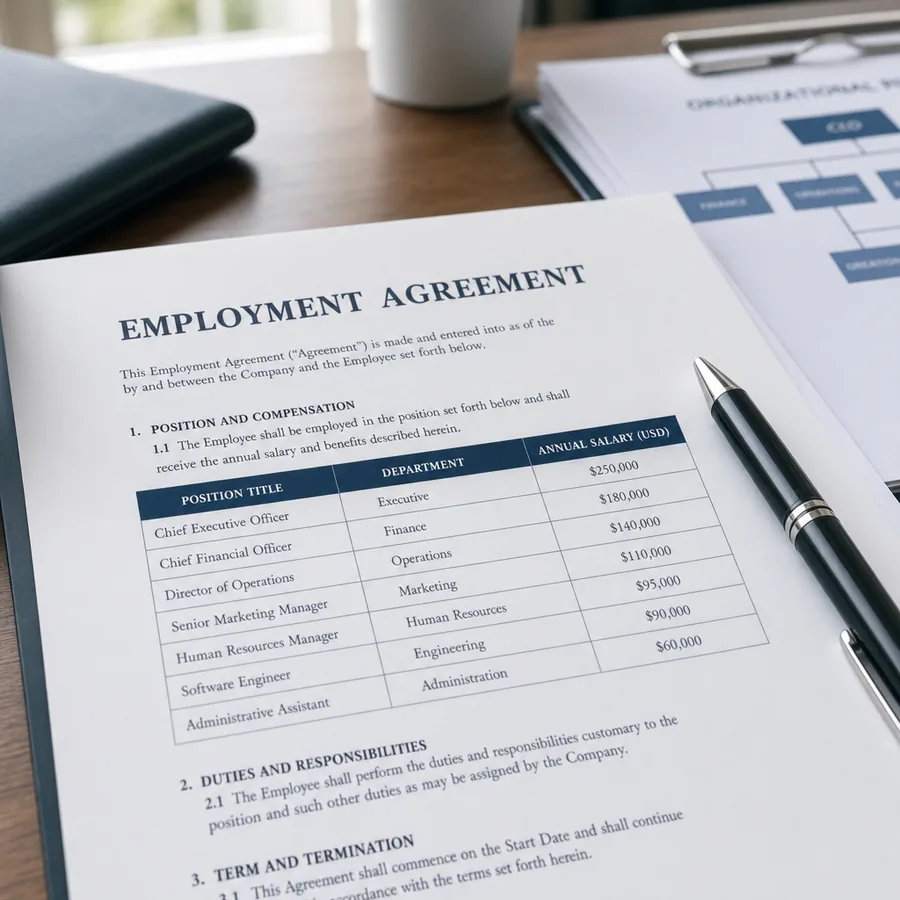
Sometimes the ultimatum isn't "resign or be fired." It's "accept this demotion or resign."
Courts look at the nature of the demotion:
Significant pay cuts. A demotion that reduces your salary by 20%, 30%, or more can constitute constructive discharge, especially if the reduction makes the job financially unsustainable.
Dramatic reduction in responsibilities. Moving a director into an entry-level role with no supervisory authority, or transferring a specialist into unrelated clerical work, can signal the employer is trying to force you out.
Public humiliation. Demotions announced publicly, or designed to embarrass the employee, add weight to a constructive-discharge argument.
Timing after protected activity. If the demotion offer comes days or weeks after you filed an EEOC complaint, reported safety violations, or testified in an investigation, the temporal proximity suggests retaliation.
The Eighth Circuit's reasoning in Mahlandt v. Wild Canid Survival & Research Ctr., 588 F.2d 626 (8th Cir. 1978), is relevant here: statements from employer agents—supervisors, HR personnel, managers—are admissible as party-opponent admissions. When your boss says, "Take this lower role or leave; we don't want you in your current position anymore," that statement is evidence the employer intended to remove you from your job.
Now, here's where it gets interesting:
Employers sometimes claim the employee "had a choice" to stay in the demoted role. But if the demotion itself is retaliatory or discriminatory, accepting it doesn't cure the violation. You're still being punished; you've just chosen a different form of punishment.
How Employer Statements Become Evidence Against Them

One of the most powerful tools in forced-resignation cases is the employer's own words.
Federal Rule of Evidence 801(d)(2) makes statements by a party's agents admissible as substantive evidence—not hearsay—when those statements concern matters within the scope of the agent's employment.
What does that mean in plain English?
Anything an HR director, supervisor, or authorized manager says about your employment can be used as evidence against the employer, even if that person isn't in the room at trial.
The Eighth Circuit made this explicit in Mahlandt: the employee doesn't need to prove the agent had personal knowledge of every fact, or that the agent had authority to make final decisions. If the statement relates to their job duties—like managing terminations, conducting investigations, or overseeing resignations—it's admissible.
Examples of admissions that bind the employer:
"If you don't resign by Friday, we'll terminate you for cause." This admission establishes the resignation was coerced and that termination was the employer's true intent.
"We need you to write a resignation letter effective immediately." This shows the employer initiated the separation, not the employee.
"You can either take the demotion or leave the company." This frames the ultimatum in the employer's own voice, proving the employee had no real choice to stay in their current role.
"There are no other records related to your performance issues." When HR closes the universe of documents, they bind the employer to that representation. If critical records are missing, the employer faces a four-way problem: either the records never existed (regulatory failure), were destroyed (spoliation), were withheld (discovery violation), or the set is truly complete (which may support the employee's case).
What About "Voluntary" Resignations You Were Asked to Write?
HR sometimes asks employees to draft their own resignation letters.
"Just write something short—effective immediately is fine."
This tactic serves the employer's interest: it creates a document in your handwriting (or your email signature) that makes the departure look employee-initiated.
But courts see through this.
If the resignation letter was written at the employer's request, under threat of immediate firing, or during a meeting where you were told resignation was your only option, the letter itself is evidence of coercion—not voluntariness.
The content of the letter matters less than the circumstances under which it was created. A resignation letter that says "I resign for personal reasons" can still support a constructive-discharge claim if you can show:
- You were told to write it by HR or a supervisor
- You were given a deadline to submit it
- You were threatened with termination or demotion if you refused
- You had just engaged in protected activity (like filing a complaint or participating in an investigation)
The Supreme Court reinforced this principle in Crawford v. Metro. Gov't of Nashville, 555 U.S. 271 (2009), holding that employees who speak out about discrimination in response to an employer investigation are protected from retaliation. If you answered questions truthfully in an HR inquiry, and days later you're told to resign or be fired, the resignation is retaliatory—even if you technically wrote the letter yourself.
The Employer's Impossible Bind: Missing Records and Closed Universes

Here's a pattern that appears frequently in forced-resignation cases:
During discovery, the employee requests all documents related to the decision to demand resignation or offer a demotion ultimatum.
HR responds: "We've produced everything. There are no additional records."
But critical documents are missing—no written performance warnings before the ultimatum, no emails discussing the decision, no notes from the meeting where the ultimatum was delivered.
Under Mahlandt, when an authorized agent (like an HR director or general counsel) states that the production is complete, that statement is a binding admission. The employer has closed the universe of records.
Now the employer is trapped in a four-way evidentiary problem:
Option 1: The records never existed. But if you're claiming the employee earned the demotion or termination, how can there be no documentation? Most employers have policies requiring written warnings, performance plans, or approval chains for major personnel actions. Missing records suggest those procedures weren't followed—or the real reason was unlawful.
Option 2: The records existed and were destroyed. That's spoliation, which triggers adverse-inference instructions: the jury may assume the missing documents would have supported the employee's case.
Option 3: The records exist and were withheld. That's a discovery violation, sanctionable by the court and devastating to the employer's credibility.
Option 4: The produced set is truly complete. In that case, the absence of legitimate documentation for the demotion or forced resignation supports the employee's claim that the real reason was retaliation or discrimination.
But it gets better:
Employers often make the records problem worse by changing their story. First they say, "We offered the demotion because of performance issues." Then, when no performance documentation exists, they shift to "We restructured the department." Then, when no restructuring plan exists, they claim "The decision was made informally by leadership."
Each shift undermines their credibility and suggests the stated reasons are pretextual.
What Courts Actually Look At
Judges and juries evaluating forced-resignation claims focus on specific factors:
Was there an explicit ultimatum? "Resign or be fired" is the clearest example, but "take this role or leave" and "submit your resignation by Friday" are equally coercive.
Was the departure immediate? Employers who demand same-day or next-day resignations reveal that the employee's exit was the employer's priority, not the employee's choice.
What was the timing? Resignations demanded within days or weeks of protected activity—EEOC filings, internal complaints, whistleblowing, testimony—carry strong inference of retaliation.
What do the employer's own statements show? Emails, texts, meeting notes, and witness testimony about what supervisors and HR said are often the most damning evidence. Under Mahlandt, those statements come in as substantive proof, not excludable hearsay.
What's missing from the record? Absence of performance documentation, approval workflows, or business justifications for the demotion or termination all suggest the employer's stated reasons aren't genuine.
How did the employer describe it afterward? If the employer told unemployment agencies the employee "resigned voluntarily," but internal emails show HR demanded the resignation, the inconsistency is powerful evidence of dishonesty.
The Burlington Northern standard asks: would a reasonable employee have been dissuaded from engaging in protected activity by this treatment? An ultimatum to resign or be fired—delivered right after the employee filed a complaint—clearly meets that test.
Frequently Asked Questions
If I signed a resignation letter, does that mean I can't claim I was forced out?
No. Courts look at the circumstances surrounding the resignation, not just the document itself. If you were given an ultimatum, threatened with immediate termination, or told to write the letter by HR, the resignation may still be treated as involuntary or constructive discharge. The letter is one piece of evidence, but testimony and employer statements about the meeting often carry more weight.
What if my employer says the demotion or departure was due to "restructuring" or "performance concerns"?
Employers frequently offer shifting explanations when the real reason is unlawful. Courts examine whether documentation exists to support the stated reason—performance warnings, reorganization plans, budget analyses. If those records are missing and the employer has stated that no additional documents exist, the absence itself becomes evidence the stated reason is pretextual.
Can HR's statements in a private meeting be used as evidence even if no one else was present?
Yes. Under Federal Rule of Evidence 801(d)(2), statements by employer agents acting within the scope of their employment are admissible as party-opponent admissions. You can testify about what HR or your supervisor said, and that testimony is substantive evidence—not hearsay. The employer is bound by its agents' statements, even if those agents don't testify or aren't called as witnesses.
Does it matter whether I was told to "resign" versus being told I'd be "terminated for cause"?
It matters for unemployment benefits and the employer's narrative, but less for retaliation claims. If the employer gave you an ultimatum—resign or be fired for cause—both outcomes are involuntary. The threat of "for cause" termination is itself coercive, designed to pressure you into accepting the resignation label. Courts recognize this as constructive discharge regardless of which option you chose.
If I took the demotion instead of resigning, can I still claim retaliation?
Yes. Accepting a retaliatory demotion doesn't waive your right to challenge it. The demotion itself is the adverse action. Courts have held that materially adverse actions—those that would dissuade a reasonable worker from engaging in protected activity—include demotions, significant pay cuts, and public humiliation, even if you formally stayed employed. The question is whether the employer took the action because of your protected conduct, not whether you ultimately resigned.