How to Document Workplace Retaliation

You suspect your employer is retaliating against you for speaking up about harassment, filing a workers' comp claim, or reporting safety violations.
You know you need to document everything.
But here's what most employment guides won't tell you: when you create the record matters almost as much as what it says. Courts give dramatically more weight to notes you made the day something happened than to a timeline you reconstructed six months later from memory.
Why Timing Matters: The Contemporaneous Documentation Principle
Federal courts operate under a specific evidentiary framework: the Federal Rules of Evidence.
Under FRE 803(6), records "made at or near the time" of an event by someone with knowledge, kept "in the course of a regularly conducted activity," can be admitted as evidence even though they're technically hearsay.
This is called the business-records exception.
But here's the critical part: the Supreme Court has held that records created for the purpose of litigation don't qualify—even if creating those records is something the business does routinely.
In Palmer v. Hoffman, 318 U.S. 109 (1943), the Supreme Court examined accident reports a railroad company prepared after every incident. The railroad argued these reports were business records—after all, the company made them routinely.
The Court disagreed.
The reports were created for litigation purposes, not to run the railroad's operations. They failed the business-records test, and the Court excluded them.
That 1943 ruling still governs how courts evaluate workplace documentation today.
What Counts as "Contemporaneous"
Contemporaneous doesn't mean "within the same nanosecond."
It means reasonably close in time to the event, while your memory is fresh and before you know litigation is brewing.
Courts have recognized these as contemporaneous:
- Notes made during or immediately after a meeting
- Calendar entries created the day of the event
- Emails sent within hours describing what just happened
- Daily work journals maintained as an ongoing practice
- Time-stamped photos or screenshots taken when the issue occurred
Courts have questioned these:
- Detailed timelines assembled months later from memory
- Retrospective summaries created after consulting an attorney
- Documents explicitly labeled "litigation file" or "for my lawyer"
- Records created only after receiving a notice of termination
The difference? Regular practice versus litigation preparation.
The Regular-Practice Requirement
Here's where it gets interesting:
Even a contemporaneous note can fail the business-records test if it wasn't made as part of your regular routine.
FRE 803(6) requires that the record be "kept in the course of a regularly conducted activity" and that "making the record was a regular practice of that activity."
Translation: sporadic documentation created only when trouble starts doesn't carry the same weight as an ongoing habit.
Examples of regular practice:
- You've kept a work journal for years, noting daily tasks and interactions
- You routinely send yourself summary emails at the end of each day
- You maintain a running calendar with meeting notes as standard practice
- You've always photographed your completed work for your portfolio
Examples that may not qualify:
- You started a "retaliation log" the day after filing an EEOC complaint
- You suddenly began saving all emails only after your supervisor's first negative comment
- You created a special spreadsheet titled "Evidence for My Case"
The legal system values consistency over opportunism.
What Effective Documentation Looks Like

Courts don't require perfect prose.
They look for markers of authenticity: specific details, neutral language, and evidence the record was created when claimed.
Strong documentation includes:
- Date and time: Not just "March 2023" but "March 14, 2023, 2:15 PM"
- Who was present: Full names, not just "my boss"
- What was said: Direct quotes when possible, paraphrases when not
- Observable facts: "She raised her voice and pointed at me" not "She was angry"
- Your response: What you said or did in reply
- Witnesses: Anyone else who saw or heard the interaction
Weak documentation includes:
- Vague timeframes ("sometime in spring")
- Legal conclusions ("This was clearly retaliation")
- Emotional characterizations without factual support
- Gaps in the narrative that suggest reconstruction
Think like a journalist: who, what, when, where, why—in that order.
The Employer's Documentation Problem
Now, here's the thing:
The contemporaneous-documentation principle cuts both ways.
Many employers respond to EEOC charges or lawsuits by assembling "performance files" filled with write-ups, warning memos, and negative evaluations—documents that were never shared with the employee during employment.
When those documents fail the FRE 803(6) foundational test, they're excluded as hearsay or admitted only as party-opponent admissions under FRE 801(d)(2)(D).
What does that mean in plain English?
The employer can't use the documents to prove what they say happened. But the employee can use the fact that the documents were created only after litigation began as evidence of pretext.
"You claim my performance was poor for six months, but you never mentioned these issues until two weeks after I filed my complaint?"
That's a powerful cross-examination.
The same rule that makes your contemporaneous notes valuable makes the employer's after-the-fact assembly suspect.
Electronic Records and Authentication

Email, texts, and calendar entries offer something paper notes don't: automatic timestamps and third-party authentication.
When you send yourself an email summarizing a meeting, the mail server stamps it with the exact send time. That metadata is difficult to fabricate and easy to verify.
Electronic documentation best practices:
- Use your personal email, not your work account (which the employer controls)
- Forward important work emails to your personal account in real time, not in bulk after a dispute
- Take screenshots with visible timestamps when documenting digital interactions
- Save cloud documents with version histories intact
- Preserve text messages by backing them up or taking screenshots
But it gets better:
Electronic records also create audit trails. If your employer claims you never reported harassment, your email to HR with a timestamp two months before your demotion proves otherwise—and the fact that it was sent contemporaneously, not assembled for litigation, gives it evidentiary weight.
Learn more about how courts evaluate these records in our guide to Palmer v. Hoffman and the Business-Records Exception.
Building a Documentation Practice Before You Need It
The most credible documentation is the kind you create before you know you'll need it.
That means building habits now, not scrambling to reconstruct events later.
Sustainable documentation habits:
- Keep a brief work journal—even just bullet points at day's end
- Calendar every significant meeting with a one-line note about the topic
- Confirm important conversations with follow-up emails ("Thanks for clarifying that...")
- Save performance reviews, awards, and positive feedback as you receive them
- Photograph completed projects as part of your professional portfolio
None of these practices require assuming your employer will retaliate.
They're simply good professional habits—but they create a contemporaneous record that will carry significant evidentiary weight if retaliation does occur.
What Courts Actually Look For
When a judge evaluates competing narratives—your version versus your employer's—documentation often tips the scale.
But not all documentation is created equal.
Courts apply a credibility analysis that weighs several factors:
Consistency: Do your contemporaneous notes align with other evidence, or do they conflict with verifiable facts?
Detail: Are the notes specific enough to suggest they were written from fresh memory, or vague enough to suggest reconstruction?
Neutrality: Do they read like factual observations, or like a brief drafted for litigation?
Timing: Were they created close to the events they describe, and do timestamps support that claim?
Pattern: Do they reflect an ongoing documentation practice, or a sudden shift after conflict emerged?
Strong contemporaneous records satisfy all five factors.
Weak documentation fails one or more.
The Litigation-Preparation Trap
Here's a mistake many people make:
They consult an attorney, then immediately create detailed chronologies of everything they can remember from the past year.
Those chronologies may be helpful for the attorney to understand the case.
But they're not contemporaneous records, and they were created for litigation purposes—exactly what Palmer v. Hoffman says fails the business-records exception.
The better approach: preserve whatever contemporaneous records you already have, then supplement them with attorney-work-product-protected materials that help counsel prepare.
The former can be admitted as evidence.
The latter helps your lawyer build your case but won't survive a hearsay objection if it's created primarily for litigation.
Understanding what constitutes retaliation in the first place is essential—read our overview on What Is Workplace Retaliation? A Plain-English Definition.
Preservation Is as Important as Creation
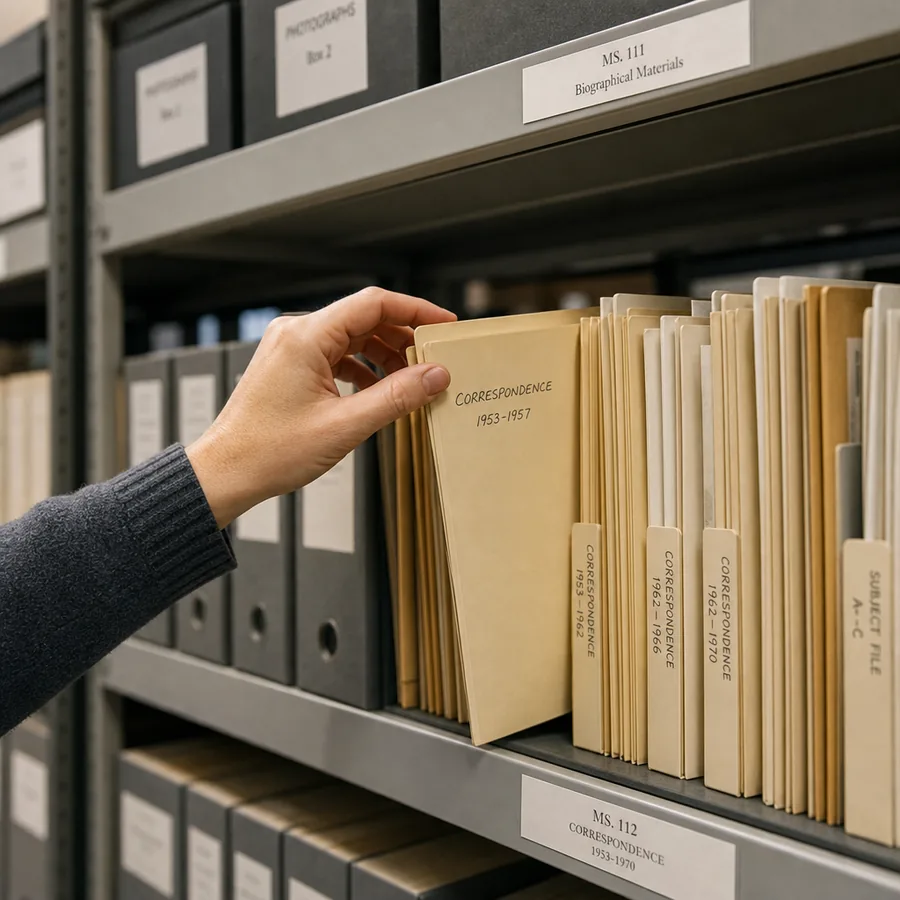
Creating contemporaneous records matters.
Preserving them matters just as much.
Courts have recognized several preservation pitfalls:
Selective preservation: If you kept notes for six months but deleted the ones that didn't support your narrative, that's spoliation—destruction of evidence. It destroys your credibility even if the remaining notes are accurate.
Format degradation: Handwritten notes that you later "clean up" into typed summaries lose their contemporaneous character. Keep the originals.
Loss of metadata: Copying and pasting email text into a Word document strips the timestamps. Preserve the original format.
Commingling: Mixing contemporaneous notes with later-added commentary makes it impossible to distinguish what you knew when. Keep additions separate or clearly marked.
Think of your documentation like an archaeological site: disturbing the layers destroys information.
When Documentation Isn't Enough
Contemporaneous records carry significant evidentiary weight.
But documentation alone doesn't win cases.
Courts evaluate the totality of the evidence: your records, the employer's records, witness testimony, circumstantial evidence, and the logical inferences that flow from all of it.
Strong documentation supports your testimony and corroborates other evidence.
It doesn't replace the need for a coherent legal theory, admissible proof of each element of your claim, and competent legal representation.
Think of documentation as a foundation, not a building.
Frequently Asked Questions
Can I start keeping a work journal now, or will courts say I'm only doing it for litigation?
You can start anytime. The question isn't whether you eventually use the journal in litigation; it's whether you created it as part of a regular business practice or specifically to build a legal case. If you maintain the journal consistently going forward—recording both routine and significant events—it demonstrates regular practice, even if the initial impetus was concern about workplace treatment.
What if I didn't document anything when events were happening? Am I out of luck?
No. Your testimony is still evidence. Reconstructed timelines, while less persuasive than contemporaneous notes, can still be admitted. And other evidence—emails your employer sent, calendar entries, witnesses who remember events—can corroborate your account. Contemporaneous documentation strengthens your case; its absence doesn't automatically doom it.
Should I show my documentation to HR when I file an internal complaint?
That's a strategic decision outside the scope of educational content about evidentiary rules. What courts have recognized is that the existence of contemporaneous records and what they contain matters for litigation. Whether to share them earlier is a question for legal counsel familiar with your specific situation.
Can my employer demand to see my personal journals or notes?
In litigation, parties can request relevant documents during discovery. Whether your personal records are discoverable depends on several factors: whether you intend to use them as evidence, whether they're protected by attorney-client privilege or work product, and what jurisdiction's rules apply. Courts balance relevance against privacy, but generally, documents you plan to offer as evidence are discoverable.
What's the difference between FRE 803(6) and FRE 801(d)(2)(D)?
FRE 803(6) is the business-records hearsay exception. If a document qualifies, it can be admitted to prove the truth of what it says. FRE 801(d)(2)(D) covers party-opponent admissions—statements by the opposing party's agent. A document that fails 803(6) might still come in under 801(d)(2)(D), but only as evidence that the party made the statement, not that what the statement says is true. This asymmetry often works against employers who create litigation-driven documents.