Can You File with EEOC, NLRB, and OSHA at the Same Time?
You reported safety violations to OSHA. Your employer cut your hours. Now you're wondering: can you also file with the EEOC if the retaliation involved discrimination? What about the NLRB if you discussed pay with coworkers?
The answer is yes—and courts have repeatedly upheld your right to do exactly that.
In this article, you'll learn:
- How concurrent jurisdiction works when one workplace incident violates multiple federal laws
- What happens procedurally when you file parallel claims with different agencies
- How courts prevent one agency's decision from barring your claims in another forum
The Core Principle: One Act Can Violate Multiple Laws
Here's the thing: federal employment law isn't a monolith.
Congress created separate statutes to protect different workplace rights. Title VII prohibits discrimination and retaliation based on protected characteristics. The National Labor Relations Act protects employees who engage in concerted activity about working conditions. The Occupational Safety and Health Act forbids retaliation against workers who report safety hazards.
A single employer action—say, firing you after you complained about unsafe equipment and mentioned that the equipment failures affected workers of a particular race—can simultaneously violate all three statutes.
Each statute creates independent enforcement mechanisms. Title VII runs through the EEOC. Section 8(a)(4) of the NLRA runs through the NLRB. Section 11(c) of OSHA runs through the Occupational Safety and Health Administration's Whistleblower Protection Program.
Courts call this "concurrent jurisdiction"—the legal authority of multiple forums to hear overlapping claims arising from the same facts.
What the First Circuit Said About Parallel Proceedings
The question reached the federal courts in Garmon v. National Railroad Passenger Corp., 844 F.3d 307 (1st Cir. 2016).
In Garmon, an Amtrak employee pursued both a Title VII discrimination claim through the EEOC and federal court and a grievance through the employer's internal process under a collective bargaining agreement.
Amtrak argued the employee had to choose one forum and stick with it.
The First Circuit disagreed.
The court held that an employee may pursue parallel proceedings under Title VII (EEOC plus federal court) and an employer's internal grievance process without waiving rights in either forum, subject to issue-preclusion rules that vary by claim type and forum.
Now, here's where it gets interesting: the Garmon court didn't just say "you can file in both places." It recognized that different forums serve different functions—and forcing employees to pick one can leave critical evidence buried.
How Different Agencies Handle the Same Facts
Each agency has a distinct procedural posture.
The EEOC operates primarily as an investigator. When you file a charge, the agency requests documents from your employer, interviews witnesses, and issues a "determination" finding either reasonable cause to believe discrimination occurred or no reasonable cause. If the EEOC finds cause, it attempts conciliation. If conciliation fails (or if the EEOC finds no cause), the agency issues a "right to sue" letter allowing you to file in federal court within 90 days.
The NLRB acts more like a prosecutor. You file an unfair-labor-practice charge. A field office investigates. If the regional director finds merit, the Board itself prosecutes the case before an administrative law judge. You don't control the litigation—the General Counsel does—but you remain a necessary party and witness.
The OSHA Whistleblower Protection Program investigates retaliation claims under Section 11(c) and more than 20 other whistleblower statutes. OSHA investigators interview you and your employer, review documents, and issue findings. If OSHA finds a violation, it refers the case to the Solicitor of Labor for possible litigation. If OSHA doesn't complete its investigation within a statutory deadline (which varies by statute), you may remove your claim to federal district court.
Here's the payoff: what one agency uncovers during discovery can strengthen your claims in another forum.
An EEOC systemic investigation might reveal patterns of discriminatory discipline across dozens of employees—evidence that supports your individual NLRB charge claiming pretextual enforcement of work rules.
OSHA's safety-violation findings can corroborate your claim that the "performance issues" your employer cited were fabricated after you reported hazards.
The Preclusion Question: When Does One Forum's Decision Bind Another?
But it gets better: concurrent jurisdiction doesn't mean infinite bites at the apple.
Federal courts apply issue preclusion (also called collateral estoppel) to prevent relitigation of factual or legal questions actually decided in a prior proceeding.
The rules vary depending on which forums are involved.
Administrative findings and federal court: An EEOC determination of "no reasonable cause" does not bind a federal district court hearing your Title VII lawsuit. The Supreme Court made clear in multiple decisions that the EEOC's administrative conclusions are not entitled to preclusive effect because the agency acts in an investigative, not adjudicative, capacity.
An NLRB administrative law judge's factual findings, by contrast, can have preclusive effect in later federal-court proceedings if the issue was actually litigated, the parties had a full and fair opportunity to contest it, and the finding was essential to the NLRB's order.
Arbitration and federal court: The Garmon court noted that arbitration awards under collective bargaining agreements may preclude relitigation of the same claim in federal court if the arbitrator had authority to resolve the statutory claim and actually did so. But arbitration of a contractual grievance (say, "termination without just cause") does not preclude a later Title VII discrimination claim alleging the termination was motivated by race, because the arbitrator wasn't adjudicating the statutory discrimination question.
State agency and federal court: Many states have "mini-EEOC" agencies that investigate discrimination claims under state civil-rights statutes. Issue preclusion from state-agency findings to federal Title VII claims is highly fact-specific and turns on whether the state proceeding afforded procedural protections comparable to federal litigation.
Internal Complaints and External Filings: Protected Activity Under Multiple Statutes
Now, here's the kicker: the act of filing with one agency can itself be protected activity that supports a retaliation claim if your employer punishes you for it.
The Supreme Court addressed overlapping retaliation protections in Crawford v. Metropolitan Government of Nashville, 555 U.S. 271 (2009).
In Crawford, an employee answered questions during an internal investigation into sexual harassment. The employer later fired her. She sued under Title VII's anti-retaliation provision.
The Court held that Title VII's anti-retaliation provision protects employees who speak out about discrimination in response to an employer's internal investigation, not only those who initiate a complaint.
The Crawford principle extends to multi-forum filings: if you file an OSHA complaint and your employer retaliates, that retaliation is both a new OSHA Section 11(c) violation and potentially an unfair labor practice under the NLRA (if discussing the retaliation with coworkers is concerted activity) and potentially a Title VII violation (if the underlying OSHA complaint involved discrimination).
Courts recognize this stacking effect. Each new retaliatory act resets limitation periods and creates independent claims across multiple statutes.
Practical Dynamics of Concurrent Filings
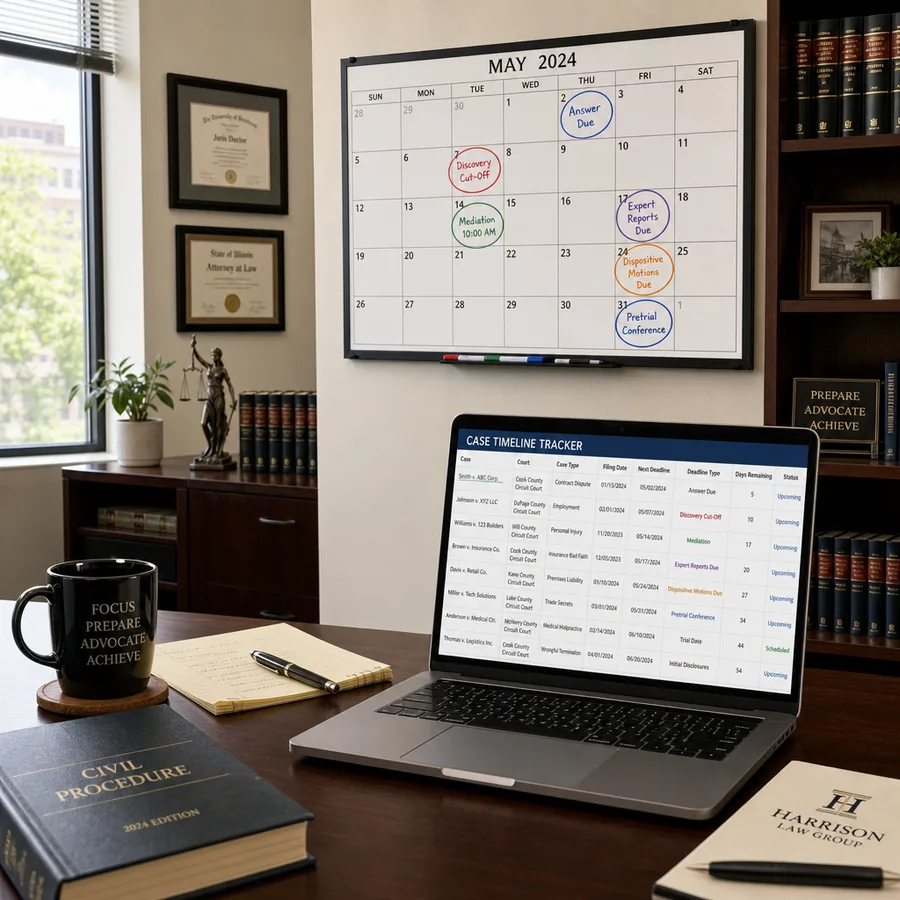
So what actually happens when you file the same facts with multiple agencies?
Timing considerations: Each statute has its own limitations period. Title VII requires an EEOC charge within 180 days of the discriminatory act (or 300 days in states with their own enforcement agencies). NLRB charges must be filed within six months of the unfair labor practice. OSHA Section 11(c) complaints have a 30-day deadline. Filing with one agency does not toll the deadline for another.
Information sharing: Agencies sometimes share investigative materials under memoranda of understanding, but they don't coordinate strategies or defer to one another's findings as a matter of course. You may be asked to provide the same documents and testimony to multiple investigators.
Settlement dynamics: Settling with one agency does not automatically release claims in other forums unless the settlement agreement explicitly says so. Employers seeking global peace typically demand releases covering "all federal, state, and local claims arising out of the employment relationship"—language broad enough to cover EEOC, NLRB, and OSHA claims simultaneously.
Attorney conflicts: If you're represented, your lawyer may need to navigate ethical rules about competence and diligence across multiple agencies. Employment lawyers routinely handle EEOC and state-agency matters, but NLRB practice is more specialized. OSHA whistleblower cases often require knowledge of industry-specific safety regulations.
Why Concurrent Jurisdiction Matters for Case Outcomes
Here's what the doctrine delivers in practice:
Preservation against procedural traps. If you miss an OSHA 30-day deadline but file an NLRB charge within six months, you've preserved at least one claim. If your EEOC charge is dismissed for procedural defects, your NLRB case continues unaffected.
Expanded discovery. NLRB regional offices routinely subpoena company-wide emails and personnel files. EEOC investigators request narrower sets of comparator data. Filing both charges gives you two discovery tracks that may uncover different evidence.
Multiple remedies. Title VII allows compensatory and punitive damages. The NLRA provides backpay and reinstatement but not compensatory damages. OSHA Section 11(c) provides backpay and reinstatement. Concurrent findings can support stacking remedies (though courts prevent double recovery for the same losses).
Leverage in settlement. An employer facing three open agency investigations has more incentive to settle globally than one facing a single EEOC charge that might be dismissed on procedural grounds.
The doctrine doesn't guarantee you'll win in any forum. But it prevents one agency's dismissal from cutting off your claims under statutes that agency doesn't enforce.
The Forum-Shopping Question Courts Have Answered
Employers sometimes argue that concurrent filings constitute improper "forum shopping"—filing in multiple venues hoping one will rule favorably.
Courts have uniformly rejected this argument in the employment context.
Forum shopping is disfavored when a plaintiff files the same claim in multiple courts hoping for a favorable forum. But filing different statutory claims in the agencies Congress designated to enforce those statutes is not forum shopping—it's following the procedural structure Congress created.
The Garmon court made this point explicitly: Congress gave employees multiple avenues of relief, and courts should not create judge-made exhaustion or election-of-remedies rules that undermine statutory schemes.
Frequently Asked Questions
If I file with the EEOC, do I have to tell the NLRB about it?
No federal rule requires cross-notification, but agencies sometimes discover parallel filings during investigations when they request the same documents. Some charge forms ask whether you've filed elsewhere. Providing accurate information when asked prevents later credibility issues, but you are not affirmatively required to notify one agency about filings with another.
Can my employer retaliate against me for filing with multiple agencies?
No. Each statute that protects the original complaint also protects the act of filing that complaint. Retaliating against an employee for filing an EEOC charge violates Title VII's anti-retaliation provision. Retaliating for filing an NLRB charge violates Section 8(a)(4) of the NLRA. Retaliating for filing an OSHA complaint violates Section 11(c). Retaliation for multi-forum filings can create stacking violations under each statute.
What happens if one agency finds no violation but another finds a violation on the same facts?
Agencies apply different legal standards and have different burdens of proof. An EEOC "no reasonable cause" finding does not bind the NLRB or OSHA, and vice versa. The findings are independently reviewable if you proceed to federal court. Issue preclusion generally does not apply when agencies are investigating different statutory claims, even if the underlying facts overlap.
Do I need separate lawyers for each agency filing?
Not necessarily. Many employment attorneys handle cases before multiple agencies. However, NLRB practice and OSHA whistleblower practice involve specialized procedural rules, and some attorneys focus exclusively on one forum. You may choose to use the same attorney for all filings if that attorney has multi-forum experience, or separate counsel if the agencies' procedures differ significantly in your case.
If I settle my EEOC charge, does that dismiss my NLRB charge automatically?
No. Settlement agreements are contracts, and their scope depends on their language. A settlement that releases only "Title VII claims" does not release NLRA claims. Employers seeking to resolve all potential claims typically include broad release language covering "any and all federal, state, and local claims" arising from the employment relationship. The NLRB will not dismiss a charge solely because you settled an EEOC charge unless the settlement agreement explicitly covers the NLRB claims and the Board approves the settlement.